

How Captivity to Shame Works: The Stimulus, the Discharge, and the Return (Part One of two)
Jazz, Shame, and Being With #12

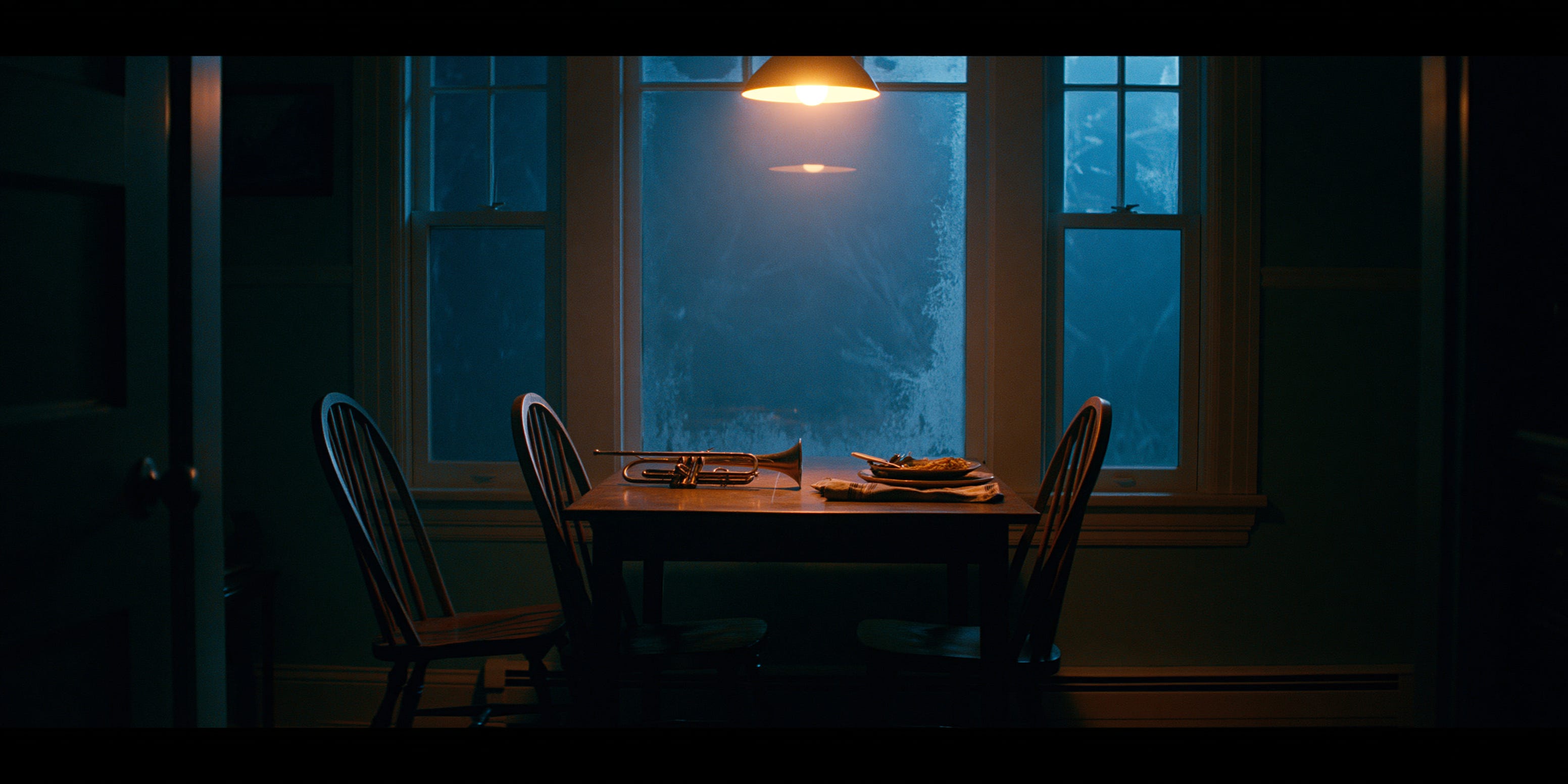
A note before the essay
Dear friends,
A quick word before the next two essays, because they will look, at first, like a different series.
Here is where we are. For eleven essays I have been diagnosing a mutation I call Dominative Christianism — a faith that trades the gospel’s grammar of gift for a grammar of achievement, in which worth is no longer received through covenant and communion but produced, demonstrated, earned.
I have traced how that creed was written into American bodies across four centuries of profane sacraments — the auction block, the ledger, the redlined map, the wall — practices that inscribed a single false story so deeply, and so ordinarily, that the people formed by it experienced it not as cruelty but as order.
You are what you produce. You belong if you are useful. You bear your own worth, and your own shame, alone. That is the creed. At the scale of a nation, it becomes the friend-enemy politics we watched stand and applaud at a prayer breakfast.
The next two essays change register, and I want to name the change rather than let it startle you. The key darkens. The tempo drops. The harmony thickens, and the melody you’ve been humming for eleven essays goes underground for a while.
It is not a different player who has taken the stand. It is the same player going down to the changes — the chord structure that was running under the melody all along.
I have to make a small confession here, because it tells you something. In an earlier draft of this very letter, I called what’s coming “the technical essays,” and I granted you permission to skim. I take it back.
That was me apologizing for the part of the work I should be handing you with both hands. These two essays are not the homework before the good part. They are the part the last eleven essays have been protecting — the ones that go under the hood to the mechanism itself, that survey the science of threat and safety, of what a body can and cannot receive, with the footnotes kept honest and the claims kept humble.
Every suite has a movement like this: the up-tempo numbers give way, the ensemble thins, and someone works out the hard harmony in the open, where you can watch the fingers move.
This is that movement. And the changes are where the tune was always true.
A word on where they came from, because provenance is half of trust. In January I published “Resistance, Grief, and Sacraments of Stupidity.” This spring, a group of men asked me to lead a retreat built around it — and there, in a room full of people who had lived what I had until then only theorized, I trialed the ideas that became these two essays.
What follows is what that weekend asked for. Not the melody — the changes beneath it. The fuller account, apparatus and all, for anyone who has ever needed to know why it was true.
And the why, reduced to a single sentence, is the reason these essays sit exactly here: the creed that generates a politics is the same creed that generates a wound at your own kitchen table.
The dinner table is the smallest ensemble there is — two people, or a few, asked to play in tune. And it is the smallest venue in which the whole drama plays.
When a person cannot receive love without inspecting it for the hidden bill, cannot be offered a gift without hearing an accusation, cannot be told a hard truth about themselves without marshaling a lifetime of credentials to prove it isn’t so — that person is reciting, in a single nervous system, the identical creed the profane sacraments wrote into a civilization.
Worth that must be achieved. A self that bears its shame alone. A world with no gifts in it, only exchange.
So these two essays are not a detour into self-help. They are the argument shown at its smallest scale — the place where you can watch the mechanism actually run, in one body, before you are asked to believe it runs in a people.
If achieved-identity theology can be seen foreclosing love at a kitchen table, then its civilizational form is not a metaphor. It is the same machine, larger.
The first essay, How Captivity to Shame Works, is an anatomy: how the ordinary acts of a person who loves — their separateness, their need, their offer, their limit — become, for someone held captive to shame, unbearable, and are expelled. It is written for anyone who has loved someone they could not reach and been slowly convinced they were the one losing their grip. Its whole mercy is one distinction: the captivity is the enemy; the captive is not.
The second, Was It Ever Real?, is its companion. It asks the question the anatomy raises but cannot answer: if the love keeps coming back as a wound, was it ever real, and is it now lost? The answer is that it was real and is not lost — and the essay is a theology of why.
A particular word to the physicians and clinicians among you — and I know you are there, because you write to me. A few pages into the first essay, a reflex from your training is going to fire. When it does, there is a word waiting for you at the exact spot where it fires.
For now I will say only this much: your own field has publicly changed its mind about what you were taught, and these essays stand on its current account, not its hallway tradition.
Which brings me to the caution I owe everyone, and it is the same caution the whole series has been pressing. Do not read these as a story about those other people. The most sophisticated form of the creed is the quiet certainty that you and I, at least, are free of it — I would never.
That certainty is itself the creed, wearing its finest disguise: worth proven, immunity achieved, the case closed.
I know, because I built that case for decades, and it took a question I could not receive — one a wary brother put to his sister about me, before he and I had ever met — to crack it open.
These essays are about the one who writes them as much as anyone he might name. That is not a flaw in the argument. It is the argument.
Read them slowly — and let me show you the whole road before you take the first step of it, because I am asking you to make a real journey with me, and you deserve to see where it goes.
We have already gone wide: across four centuries, a whole civilization’s profane sacraments, the creed written into a people. These next two essays go the other direction — all the way in, to the smallest scale there is, one nervous system at one table.
After them, I mean to close the distance between the wide and the small, and to show you that the wound at your kitchen table and the sacraments of a civilization are not metaphors for one another but a single creed, recited at two scales.
And then, together, we will turn to the question this whole series has been walking toward from the first essay: how a whole people comes to recite that creed as though it were the gospel — and what could teach a body, or a body politic, to receive love again instead of extracting it.
I do not yet have the whole of that last answer. That is precisely why I want you with me for it.
For now: the smallest ensemble. Two players, one table, the whole thing in miniature.
Count it off.
Yours in the music,
Craig
How Captivity to Shame Works
Jazz, Shame, and Being With — Essay #12
The Stimulus, the Discharge, and the Return — how an ordinary act of love becomes a wound, and how, on its own schedule, the warmth comes home
Part One of a two-part inquiry, continued in “Was It Ever Real?” (Part Two, Essay #13)
Frame: A Universal Captivity, Not a Defective Class
This spring I sat in a room with a dozen men, and one by one they described the same impossible morning. The note rehearsed for days, handed back as evidence of manipulation. The meal that used to mean peace, inspected for the hidden bill. The plain sentence spoken without defense — I’ve missed you — and the face across the table closing like weather.
Every man in that room had been slowly convinced, over years, that he was the one losing his grip. Not one of them had a name for what he was living.
This essay exists to give them the name.
I wrote it for people who love someone held captive to shame — who have watched their gentlest offerings return to them as wounds and begun, quietly, to wonder whether the confusion is a defect in them. It is not. There is a pattern here, it is not their fault, and naming it is the whole task.
The theologian’s job, Hauerwas liked to say, is to equip the saints with words; nowhere is that equipment more needed than here, where the thing being suffered has no good name and the person suffering it has been handed the blame for it. What follows is the first half of that equipment: an anatomy of how the wounding works.
I should tell you at the start which figure in this anatomy I am, because the honest answer is the reason I trust it. This essay describes two people: the captive — the one held captive to shame — and the near one, whose ordinary humanity becomes the trigger.
I have stood in the near one’s kitchen. And I have been the captive.
The catechism I absorbed in Baton Rouge — bear the weight, don’t ask for help, count the bearing as proof you’re enough — is one of this captivity’s politer dialects, and I recited it for fifty years while calling it faith.
So when I say the machinery described here is standard human equipment, I am not extending charity to a class of unfortunates. I am reading my own schematics.
✦
Here is the whole argument, small enough to carry. The deepest human need is attunement — to be in tune with one another — and shame is the body’s signal that we have fallen out of tune.
For most people, most of the time, that signal is usable: it stings, it prompts a re-tuning, a reach back toward the one we’ve drifted from.
For a person held captive to shame, the same signal arrives as a verdict on the self — not we are out of tune but I am what is wrong — and a verdict like that cannot be borne, cannot be used to repair, and so can only be gotten rid of.
This essay traces how that happens: how the ordinary acts of a near one — their separateness, their need, their offer, their limit, each in itself only a small and normal loss of attunement — become unbearable, are converted into felt assaults, and are expelled; and how, in time and not by anyone’s effort, attunement is recovered.
One commitment governs everything, and I will defend it to the last line: these are claims about human nature, not a portrait of a defective kind of person.
The machinery described here is in you. It is in me — I have just told you where mine came from.
What varies between people is not the presence of the machinery but the settings: how easily it trips, how violently, how often, how slowly it recovers.
To miss this is to turn an anatomy of a shared vulnerability into an indictment of a class — which is precisely the move this whole project exists to refuse.
That refusal shapes the vocabulary. Throughout, the person is named not by a category they are but by a condition they suffer: one held captive to shame. The working descriptors underneath — shame-bound, low threshold, narrow window, foreclosed trust, the mode where feeling becomes fact — translate the clinical literature without reproducing the stigma that makes it unhearable to the very people it describes.1
✦
And here I need a particular word with the physicians and clinicians among my readers, because I know you are there — you write to me. Some of you have already recognized the territory, and a reflex from your training just fired: the hallway diagnosis, the word that flagged a chart, ended treatment relationships, and — whispered about a colleague — ended careers.
I am asking you to hold that reflex up to the light, because it is a fossil, and your own field says so.
The eleventh revision of the ICD abolished the discrete personality-disorder categories outright in favor of a dimensional model — the difference between the captive and the rest of us is now, officially, a matter of degree and not of kind.
And the researchers who did the most to map this condition have published what amounts to a retraction of the old picture — the paper is actually titled “What We Have Changed Our Minds About” — reframing the condition first as an absence of protection rather than the presence of a disease, and then as an adaptation: the intelligent response of a child to an early world that could not be trusted, still running long after the danger has passed (Fonagy et al. 2017a; 2017b).
The longitudinal studies found remission the rule, not the exception. What you were taught to read as a fixed defect of character, the current science reads as a captivity with a door.
I am a theologian, not a clinician, and I will not pretend otherwise — but I did the reading, the footnotes will show my work, and the claim I am making sits squarely on your own guild’s most current account of itself.
What I bring that the literature cannot is a further diagnosis: the stigma you were trained into is itself a specimen of the thing this essay anatomizes — shame mistaken for a verdict on the self.
There is a certain dark comedy in a healing profession catching the disease from its own textbook. None of us is exempt from the water.
✦
A word on who the two figures are, because the anatomy must not default to a marriage. The near one is not fixed by a category of relationship. He or she is whoever is, so to speak, on the stand with us — the fellow player the present moment has called into our ensemble.
“Near” is not distance, and not even standing affection; it is the music. A spouse, a child, a parent, a colleague, sometimes a near-stranger drawn into a shared task — each becomes a near one in the instant attunement is asked between them.
The same dynamics therefore appear wherever the captive is called to play in tune: at home, with children, among kin, at work. This is, not incidentally, the incarnational “being with” rendered in the key of jazz — presence is not a standing status but a summons answered in the encounter.
Why captivity? Because the word does what no diagnosis can. To say someone is a defect is to make them the enemy of those they wound; to say someone is held by an old fear is to name them a sufferer, which invites compassion and the language of rescue.
The captive is not the enemy. The captivity is.
And because the captivity tripwires on the very acts by which love is performed, a hard distinction must be carried from the start and will be defended at the end: the near one who triggers the response is its proximate cause without being its moral fault. The near one is the stimulus, not the wrong.
Holding those two truths in one hand is the whole pastoral payload, and the mechanism that follows is what makes it possible to hold them.
The captivity also carries an older name than anything in the journals. The verdict the captive cannot bear — I am what is wrong — is the intimate form of a creed this series has traced at the scale of nations: that worth must be achieved, and can therefore be lost, rather than received, and therefore secured.2
The tradition called the underlying condition the bondage of the will3 — a captivity that is not chosen and cannot be exited by being argued with — and located it not in a damaged few but in human nature as such: the same capacity that makes a person able to love makes them able to be captured. The factories never close.
To find the captivity in our common humanity is not to excuse it. It is to refuse, one more time, the constitution of the captive as a separate and defective kind, set over against the rest of us who are supposed to be free.
A word about method, and then the anatomy. The illustrations throughout are composite and de-identified; they describe a pattern, not a person — though if you have lived the pattern, they will describe your Tuesday with unnerving precision. That is not surveillance. That is what it means for a pattern to be real.
We will walk the cycle in its natural order: first the stimulus — how an ordinary act becomes a shame stimulus; then the hinge — how the resulting shame is relabeled as the near one’s offense; then the discharge — what the captive does with a charge that cannot be held; and finally the return — what allows attunement to be recovered.
✦
One more thing before we go in, because you deserve to know the shape of the whole. This inquiry has two movements of its own. This essay — Part One — is an anatomy: it asks how the wounding works, from the stimulus through the discharge to the return, and by design it stops there.
Its companion — Part Two, “Was It Ever Real?” — takes up the question the anatomy raises but cannot answer from inside its own method, the question that arrives at two in the morning after the mechanism has been understood: if the love I keep offering keeps returning as a wound, was it ever real, and is it now lost?
Part Two gives the theological ground on which the answer is no. Part One names why the love wounds; Part Two names why, wounding, it is not defeated.
Beyond both stands a third question neither paper presumes to settle — what faithfulness requires of any particular near one, whether and how long to stay — named at the close of each as the limit of its reach and left, deliberately, in your own hands.
That is the whole road. Here is the first step.
Movement I — The Stimulus: How an Ordinary Act Becomes a Shame Stimulus
The first question is the one most worth answering precisely, because it is the one that produces both the most confusion and the most false guilt: how does an ordinary, even loving, act of the near one become the occasion of a shame response? The answer requires three things in sequence — an account of what shame is responding to, a mechanism for how the response fires, and a typology of the four acts that fire it.
The keystone: attunement, and shame as the affect of communion
The deepest human need is attunement — to be in tune with one another, the moment-to-moment mutual regulation of gaze, voice, and gesture by which two nervous systems sustain safety and shared meaning (Stern 1985; Tronick 2007; Dana 2018).
We are made for communion, and we register it in the body before we know it in thought. This is the need that every one of the triggers will be found to threaten, and naming it reorganizes the whole question of what shame is.
A word about that word, affect, because everything turns on it. An affect is not an emotion. Emotions have stories in them; they take time; you can be argued into and out of them. An affect is faster and dumber than that — an involuntary bodily program that fires in milliseconds, before you have had any say in the matter.
Tomkins counted nine of them, standard equipment in every human infant. And Nathanson taught us to see the sequence: first the affect, which is biology; then the feeling, which is noticing the affect; then the emotion, which is the affect wrapped in everything that has ever happened to you.
Shame begins as the first thing, not the third. No one chooses it. It arrives.
Shame is the affect that guards this need. It is not, in the first instance, a verdict; it is the alarm that registers a break in attunement and summons repair — the rupture of what Gershen Kaufman called the interpersonal bridge, felt in the body as an interruption of interest and joy (Kaufman 1989; Nathanson 1992). An alarm only a creature made for connection could feel.
Silvan Tomkins located its function precisely: shame is the affect that interrupts interest and joy the instant relational attunement breaks, halting the reach toward the other until the tune can be recovered.
Thomas Scheff, naming the same event at the level of the bond, defines shame sociologically as the affect “generated by a threat to the bond, no matter how slight,” and calls it “the most social of the basic emotions” (Scheff 2000, 97) — for where fear signals danger to the body and anger signals frustration, shame alone tracks the state of our attunement, and so saturates ordinary life.
Everything then turns on how that signal is heard, and here a distinction between rightly-ordered and disordered shame does the decisive work.
Rightly-ordered shame hears the dissonance as a calibration — we have fallen out of tune; re-tune — and moves toward reconnection; it is the shame that, as John Bradshaw says, teaches finitude and humility and makes empathy possible (Bradshaw 1988).
Disordered shame hears the same signal as an ontological verdict — not we are out of tune but I am what is wrong — and that sentence, passed upon the whole self, cannot be borne.
The captive’s shame is shame of the second kind. The break in attunement that should prompt a re-tuning is instead received as a judgment on existence, and because the verdict is unbearable, it cannot be used to repair; it can only be discharged.
That is the captivity, as plainly as it can be said: not that the captive feels shame — everyone feels shame — but that for her the signal arrives as a sentence on the self — the kind a judge hands down, not the kind a grammarian parses. A sentence like that cannot be revised. It can only be served, or discharged.
This reframes the four triggers exactly. Separateness, need, offer, and limit are not assaults; they are the ordinary moments in which attunement is momentarily lost — the small dissonances that, in any living bond, simply call for a re-tuning.
Before I show you the picture, I should tell you what I used to think cherishing meant, because I was wrong about it for most of my life, and the mistake is the one this whole essay circles.
I thought it meant disappearing. Studying someone’s weather so closely that I could arrive with the answer before the question was asked. Wanting nothing. Needing nothing. Taking up no room at all. Loving so well that there was no one left in the chair. I would have called that devotion. It was a self erasing itself and calling the erasure love — which is only the old catechism again, wearing a wedding ring: be the gift, bear the weight, never need.
Now watch Chris Botti. At JazzFest this spring I watched him do the thing that undoes me every time. When one of his players took a solo, Botti turned toward him — sometimes turning his back on us, on the whole crowd — and listened, grinning, leaning in. He was not waiting for his turn. He was receiving what was offered. And when the solo landed, he answered it: a few licks, a phrase that said I heard you, and the tune went on, larger than it had been.
Notice what he did not do. He did not vanish. He is still holding his horn. He is entirely turned toward the other man and entirely still himself, and those two facts are not in tension — they are the same fact. A man who has disappeared cannot cherish anyone. There is no one left there to do it.
That is cherishing. Not the absence of a self. The turning of one.
And that is what an ensemble is. Not people playing at once. People offering and receiving, in turns, in tune. The offer is the whole art — and so is the receiving.
An ensemble does not stay in tune by never drifting; it stays in tune by constantly hearing the drift and correcting toward one another.
The difference between the captive and her near one is not that one drifts and the other holds steady — both drift — but that the near one can hear the dissonance as a cue and reach back into tune, while the captive hears it as the verdict I am defective and must expel it.
Name it at the level of the signal: the captivity is the inability to use shame as a call to re-tune, and the compulsion to read every call as a sentence.
✦
There is an old pattern in the Psalms that the scholars name in three beats: orientation, disorientation, reorientation.4 You are at home in the world and it holds you — that is orientation. Then the floor drops, and nothing is where you left it — that is disorientation, and it is where most of the Psalms actually live, which is a great and underpreached comfort. And then, sometimes, not on schedule, you are set down somewhere new and find you can sing again.
What captivity to shame does is a crueler thing than ordinary disorientation, and it took me years to see the difference. Ordinary disorientation is losing your way to the thing you love. This is the thing you love becoming the way you get lost. Attunement — closeness, being seen, being reached — is the good she was made for, the north star the whole nervous system steers by. And it is that star, precisely, that now reads as danger. Not a detour from home. Home itself, gone electric.
That is the tragedy this essay is trying to name, before it names a single mechanism. Hold it while we go under the hood, because everything the machinery does, it does in service of a soul that has lost the one direction it was built to trust.
The neurobiological spine: the biobehavioral switch
The keystone tells us that the slightest break in attunement registers as shame — and registers in the body, in milliseconds, before anyone has decided anything. What it does not yet tell us is how, for the captive, that registration gets locked into a verdict. For the mechanism, the most precise account we have comes from Peter Fonagy and Patrick Luyten, building on Linda Mayes and Amy Arnsten; they call it the biobehavioral switch (Fonagy and Luyten 2009, 1366–1368).
The model begins by distinguishing two systems for reading other minds. Controlled mentalizing — the slow, reflective, effortful capacity to consider deliberately what another person is thinking and feeling — runs on the brain’s executive machinery, the lateral and medial prefrontal cortex, the parietal cortex, and the rostral anterior cingulate.
Automatic mentalizing — the fast, implicit, reflexive snap-read of another’s intent — runs instead on the amygdala, the basal ganglia, and the ventromedial prefrontal cortex, systems that lean on immediate sensory cues.
In a regulated state the two work together, the slow system checking and correcting the fast one.
The switch is what happens to that balance under rising arousal. As emotional stress climbs, Fonagy and Luyten write, “there is a switch from cortical to subcortical systems, from controlled to automatic mentalizing and subsequently to nonmentalizing modes” (1367).
Brain function shifts “from flexibility to automaticity” — from the slow executive operations of the prefrontal cortex to the fast, habitual, instinctual responses mediated by posterior and subcortical structures — and, in their decisive phrase, “mentalizing appears to disappear as self-protective physical reactions (fight–flight–freeze) come to dominate behavior” (1368).
The reflective capacity that could have received the near one’s act as the act it was goes offline, and a fast, threat-biased system takes the controls — a system that does not read an offer as an offer or a need as a need, but scans for danger and reliably finds it.
When this happens, the mind drops into what Fonagy elsewhere calls psychic equivalence, the mode in which the felt is lived as the real, so that “I feel you are against me” is experienced, without any reflective gap, as “you are against me” (Fonagy et al. 2002).
I know this switch from the inside, which is why I will not let anyone read this section as a tour of other people’s brains.
Mine does not trip hot. It trips cold and competent: the voice goes even, the sentences get precise, and someone I love finds themselves talking to a very well-run office where a man used to be.
It took me an embarrassing number of years — and a therapist with no mercy for my vocabulary — to understand that this performance was not the calm, cool officer under fire I took it for. Annapolis taught me that steadiness, and taught it well. It is a fine thing in a firefight and a catastrophe at a kitchen table.
What I called composure was the same switch, thrown in the direction my formation permitted. I needed re-formation. I am working on it.
Two features of this model carry the non-defect spine as hard neurobiology rather than as charity. First, the switch is in everyone; it is an evolved mechanism with obvious survival value, because in the presence of a predator one wants the fast system, not the philosopher.
Second, and decisively, the threshold at which the switch trips is variable, and “the threshold for switching can be lowered as a result of exposure to early stress and trauma” (1368).
Their thesis sentence states it cleanly: the condition is “primarily associated with a low threshold for the activation of the attachment system and deactivation of controlled mentalization” (1355). The machine is universal; only the trigger-point differs.5
In the person whose early environment did not lower the threshold, it takes a real and sustained rupture to throw the switch. In the person held captive to shame, the ordinary arousal of being needed, being offered something, being told no, or simply being close is enough — and the instant it trips, the system that could have heard the dissonance as a cue is gone, replaced by the one built to read it as a sentence.
This switch is also the single event that unifies the four neuroscience literatures in view here, which are not four competing accounts but one occurrence described from four vantage points.
What Stephen Porges names as the collapse out of the ventral-vagal state of social engagement into sympathetic mobilization and then dorsal-vagal shutdown; what Daniel Siegel names as the exit from the window of tolerance, the narrow band of arousal within which a person can stay regulated and reflective; what Allan Schore names as the going-offline of the right-brain orbitofrontal regulator; and what Fonagy names as the deactivation of controlled mentalizing — these are one switch, seen autonomically, phenomenologically, anatomically, and cognitively.
The narrowness of the window, in this vocabulary, simply is the lowness of the threshold.
One consequence of the switch needs saying plainly, because the whole theological argument I am building depends upon it. If the event that converts an offer into an assault is a subcortical state-shift below the level of deliberation, then it cannot be reached by deliberation — not by reasoning, not by evidence, not by moral appeal, and least of all by shaming.
Schore’s distinction between the levels is exact: shame is processed in the fast, subcortical floor of the brain, while the achievements meant to answer it — insight, argument, resolve — are cortical, and one cannot patch the lower level by addressing the higher.
Bessel van der Kolk made the same point, and we might compress it into a rule: story follows state. The body arranges itself first and the narrating mind sprints after, supplying reasons for a verdict the nervous system has already passed.
This is why a dominative theology — one that tries to shame, instruct, or argue a person out of their captivity — is not merely unkind but mechanically futile: it addresses the narrator and never the state, the cortex and never the threshold. One cannot shame a threshold higher.
The only thing that moves a threshold is the slow, bodily, relational work the final movement will describe — and that work is the precise opposite of domination, which is why the psychology and the incarnational theology arrive, by different roads, at the same posture.
The plunge and its developmental origin
What follows is the most technical stretch of this essay, and I would rather tell you where we are going than march you through it. Three claims, in order. Shame is not a thought but a fall — a fast, involuntary drop from one bodily state into another. That fall was first learned in a particular scene, in the second year of life, when a child reached for a face and the face did not answer. And the machinery that governs the fall is built, not issued at birth — which means it can be built badly, and it means it can be rebuilt. Hold those three, and you can let the rest wash over you.
Beneath the switch, described from above, lies the bodily event it names — the plunge itself — and Allan Schore’s developmental neurobiology supplies it in the detail the rest of the literature only gestures at, most fully in his Affect Dysregulation and Disorders of the Self (2003).
Schore’s claim there is that shame is not a slow cognitive appraisal but a rapid, involuntary state transition: in his words, shame represents “this rapid state transition from a preexisting positive state to a negative state,” accomplished by “a sudden shift from energy-mobilizing sympathetic- to energy-conserving parasympathetic-dominant” arousal (Schore 2003, ch. 1).
The body does not reason its way into shame; it drops.
He locates the origin of this drop in a precise and ordinary developmental scene, and it is the exact template for the adult offer and need.
In the second year, Schore argues, the caregiver shifts from regulator to socialization agent, and shame makes its first appearance — at fourteen to sixteen months — as “a specific inhibitor of interest-excitement and enjoyment-joy,” the affect he, following Tomkins, calls “the primary social emotion” (Schore 2003, ch. 1). The scene is a reunion: the toddler, in an excited state of expectation, reaches toward the caregiver’s face anticipating the shared delight that earlier reaches produced, and meets instead a face that is unexpectedly misattuned — a display of disapproval or disgust.
The break in the anticipated visual-affective communication triggers what Schore calls “a sudden shock-induced deflation of positive affect” (Schore 2003, ch. 1).
This is attunement lost made flesh: the reach for the shared tune meets dissonance, and the body falls.
Now watch what happens when that child grows up, because the scene does not disappear. It restages itself, with the roles switched.
The captive was once the one reaching; she learned, in her body, that a reach toward a face is dangerous. Now she is the face. And when the near one reaches toward her — with an offer, with a need, which are the two forms a reach takes — her body reads the reach as the opening of the scene she survived, and it fires before she has thought anything at all.
So both people in the room are living one moment from opposite sides. The near one is the toddler now: reaching, hopeful, met by a face that cannot answer. That is why the reach itself, and not any failure in it, is the dangerous moment. The bid is the wound.
So Schore supplies the connective tissue between Tomkins and Porges and, with them, completes the physiological floor beneath the switch.
Tomkins names shame as the affect that interrupts interest and enjoyment the instant a reach toward connection is blocked. Porges names the autonomic endpoint: collapse into the dorsal-vagal state. Schore specifies the regulator and the trajectory between them. It is the right-lateralized orbitofrontal system, built well by early attunement and under-built by its absence, governing precisely this sympathetic-to-parasympathetic transition — the ergotropic-to-trophotropic shift into what he calls “conservation-withdrawal” (Schore 2003, ch. 1).
The deflation is the top of a slide. Its bottom — when the threat is severe and no escape is available — is frank dissociation. Schore’s account of relational trauma describes the descent: un-regulatable hyperarousal, finding no behavioral exit, collapses downward through massive inhibition of the dorsal vagus into a hypometabolic conservation-withdrawal that numbs the body and desomatizes the self (Schore 2003, ch. 7).
The plunge of shame and the dorsal collapse of dissociation are one continuous descent, seen at two depths.
Which is to say, in plain English: shame is a fall. Dissociation is the bottom of the same fall. The body has one door out of unbearable exposure, and it opens downward.
The switch and the plunge describe the captive’s machinery in operation; a further question is why, in some people, the machinery is set to fire so easily.
The answer comes from the developmental researchers — the people who spend careers filming infants and caregivers, frame by frame, watching a nervous system get built. It is the deepest ground of the non-defect frame, because it shows that the capacity to regulate shame is not issued at birth but built — and what is built can fail to be built.
Schore’s central claim is that the right-orbitofrontal regulator matures experience-dependently, wired across the first two years through the affective transactions of attachment, so that, in his often-repeated formula, “the self-organization of the developing brain occurs in the context of a relationship with another self, another brain” (Schore 2003, chs. 1, 4).
The attuned caregiver who repeatedly meets the infant’s distress and re-attunes after each rupture is, quite literally, installing the orbitofrontal circuitry the adult will later use to regulate shame alone: interactive repair, internalized again and again, becomes the capacity to recover.
The power to bear shame is therefore first the memory of having been helped to bear it.
Where that early environment is chronically misattuning or frankly traumatic, the same experience-dependence runs in reverse.
A growth-inhibiting environment — Schore’s term for prolonged unrepaired stress and heightened negative affect during the critical period — retards the maturation of the regulator. And relational trauma actively damages it: elevated stress hormones and the excitotoxic biochemistry of chronic dysregulation drive an excessive apoptotic over-pruning of the developing right corticolimbic circuits. In his phrase, “states become traits,” and the regulatory deficit is built into the core of the evolving personality (Schore 2003, chs. 5, 8, 9).
The trait, note, is the threshold, not the firing: a history sets how easily the switch trips, never how long any one trip must last.
The lowered threshold the switch model names is not, then, a free-floating fact; it is the functional signature of a regulator that was under-built or over-pruned by an early world that could not be relied upon to help.
Schore even maps two developmental routes: abuse and hyperarousal toward the affective-reactive pattern, neglect and hypoarousal toward the colder, more withdrawn one. But for our purposes the shared point is the decisive one. The setting was set by a history, not chosen by a will.
Fonagy and colleagues arrive at the same place from the side of the mind, and add the layer that bears most directly on the offer and the limit.
Early attachment stress, they argue, lowers the threshold at which arousal deactivates controlled mentalizing (Fonagy and Luyten 2009); the result is best read not as the presence of a disease but as the absence of a protection— a failure to build the flexible, reflective resilience that lets most people reappraise a threat and recover from it (Fonagy et al. 2017a); and beneath both lies the foreclosure of epistemic trust, the openness to being taught and changed by another, which a non-benign early environment installs as an adaptation — an intelligent, self-protective mistrust of communication that has since outlived the danger that made it wise (Fonagy et al. 2017b).
What makes an aversive event traumatic, they observe, is finally the sense that “the mind is alone” — the precise inverse of attunement.
✦
Two consequences follow, and they govern everything earlier in this essay.
First, the captivity is a predisposition, not a destiny: because the systems were laid down by experience, they remain — and here is the word the science gives us, which is a word of hope — plastic. Re-openable, in Schore’s term, so that insecurity can still move toward earned security across the lifespan — which is why the movement on recovery is not wishful thinking.
Second, the captive did not author the setting that now fires so easily; she was formed, by a history she did not choose, before she was ever an agent who could choose.
This is the developmental floor beneath the whole non-defect frame and beneath the both-at-once it insists on: the captive is bound by a past she did not write and capable of a future she can still, in part, be helped into — which is exactly why the one thing that reaches her is not the verdict she was handed but the re-attunement she was denied.
✦
It is worth pausing on what, in all of this, the word trauma actually names, because everything here turns on it, and the answer is not what the word’s violence suggests.
Bonnie Badenoch’s contribution here is decisive: trauma, on her reading, is defined not by the magnitude of what happened but by whether anyone was there to help the child carry it.
What embeds an overwhelming experience as a lasting wound is not the event itself but, in her words, “who is with us before, during, and after the overwhelming happening — or non-happening, in the case of neglect” (Badenoch 2018).
An experience that is accompanied — met, named, and soothed by another — can be metabolized; the same experience suffered alone becomes lodged in the body, where it goes on signaling that the danger is still present.
She names this the passage from potential trauma to embedded trauma, and what carries an experience across that line is aloneness: “one of the prominent features of trauma is the sense of being alone with the experience.”
This is precisely the fact Fonagy named from the side of the mind, and it widens what counts as a wound, in a way that matters for everything that follows.
Trauma, so defined, is a spectrum and not a category — running from gross abuse and neglect at one extreme to subtle, chronic, even well-meaning misattunement at the other — and the determining variable along its whole length is not the severity of the event but the absence of a witness.
I learned what a witness is in an emergency room.
Years ago, in my clinical training as a chaplain, I was sent to sit with families who had just been told. One I still carry: a young man on a motorcycle, and then a room of people making sounds I had never heard a human being make. I had nothing to offer. No medicine, no explanation, no comfort worth the name. I remember thinking, with something close to panic: what am I for?
Here is what I was for. If a tree falls in the woods and no one hears it, the philosophers ask whether it made a sound. A grief that no one hears asks a worse question — whether it happened at all. My job was to hear it. To stay in the room, and let their sobs land on a person instead of on the walls. Not to fix anything. To make it real by receiving it.
That is a witness. And a child who suffers without one is not being toughened. She is being left to hold, alone, something no nervous system was ever built to hold alone.
✦
And the word alone needs correcting here, because it is too kind. The worst version is not an empty room. It is a full one.
Fonagy’s phrase for what makes an experience traumatic is exact, and notice that it is not she was alone. It is that the mind is alone. A body can sit in company while a mind sits in solitary confinement — and it is the mind’s solitude that does the damage. Which is why this harm can be done by people who never raised a hand, and who would be honestly astonished to learn they had done it. Presence that will not receive you is not the absence of a witness. It is a witness who has decided you are not there.
Say the hard thing plainly, because a reader raised in a house with no bruises may be about to excuse herself from this chapter. Nothing has to be violent for this to happen. A child can be fed, clothed, praised, driven to practice — and left alone in every moment that mattered. Her body will file that as danger, because for a small creature whose only survival strategy is a bond, unbearable feeling with no one who will receive it is danger.
And a body that learns danger does not sit still. It adapts. It builds the guard it will still be carrying long after the danger is gone.
It is also why the shame-binding the captive learned can be read, in its origin, as an intelligent solution rather than a defect: a child bound to a needed but unsafe caregiver does the sane thing and stays attached, taking the badness into herself rather than risk losing the only bond she has.
A word of caution caps this developmental account. Schore offers these as working models, not settled fact, and the autonomic-switch reading of shame is best held as strongly corroborated by its convergence with Tomkins, Nathanson, Porges, and Siegel rather than as independently proven.
Held that way — as the most detailed and best-integrated physiology of the plunge and its origin the literature offers, not as the last word — it carries the weight I ask of it here.
The four triggers
With the keystone and the switch in place, the four acts that trip the response can be named. They are not four kinds of provocation; they are four faces of one fact — that the near one is a separate, living, loving person — each of which raises arousal past the lowered threshold and registers, in the captive, as a break in attunement that the disordered signal then reads as a verdict on the self.
Separateness. The first trigger is the hardest to credit, because it is not anything the near one does but something the near one is: a separate mind, with its own view of things, which is not the captive’s.
Here is how it arrives. You think the two of you are on the same side. You bring a plan you worked out with care, or you simply say, gently, I see it a little differently — and the temperature drops. You are not answered; you are charged — with coldness, with condescension, with attacking her, when all you did was think your own thought out loud.
The disagreement itself is never reached, because the disagreement was never the problem; the problem was that you turned out to have a mind of your own.
Anyone who has loved a person held captive to shame learns to feel this coming — the small flinch as you become, for a moment, a separate person, and the reflex to make yourself agreeable again before it lands.
The reason cuts deeper than touchiness. To hold another person’s separate point of view in view at all requires mentalizing — keeping one’s own mind and the other’s open at once — and mentalizing is precisely the capacity the switch takes offline.
In the mode where feeling becomes fact, there is no room for a second, differing mind; the near one’s independent reasoning is not received as a contribution but registered as a contradiction, an assault on a reality that cannot survive revision.
Yielded to in silence, separateness can pass unpunished; the instant it speaks with a perspective of its own, it trips the wire.
Need. The second trigger reverses the direction of care. In the shame-bound system the people closest exist, structurally, to supply regulation, reassurance, and confirmation; the arrangement runs one way (Lawson 2000).
When the near one becomes the one who needs — through illness, dependency, or simple distress — the supply line reverses, and the reversal is registered not as an occasion for care but as a violation, because genuine caregiving requires the surrender of control to another’s bodily condition, and surrendering control is the one thing the threatened self cannot do.
Schore supplies the developmental reason: to tend a suffering person is to let their state set the agenda, the very attunement-and-surrender that an under-built orbitofrontal regulator cannot sustain without the internal collapse the whole system exists to prevent (Schore 2003, ch. 1). The need is not refused out of cruelty; it is fled, because it asks for the one capacity the captivity forecloses.
The trigger reaches its purest and most exposing form not in a passing distress but in the sustained bodily care of the dependent — the bathing, the lifting, the months of presence that an incapacitated or dying near one requires — and that extremity reveals two features a smaller demand would hide.
The first is that the response is often anticipatory: the shame-anxiety fires not when the demand arrives but as it approaches, in dread of being found wanting at the very thing the captive cannot give, so that the captive may defend against an accusation of poor caregiving that no one has yet made, the prosecutor being internal.
The second, and the one most easily misread as ordinary helping, is that the captive can frequently perform the managerial form of care while being unable to perform the embodied one. Arranging the finest physicians, marshaling contacts, organizing the logistics of an illness — these preserve control, can be done at a distance, even draw admiration, and may be carried out with real competence.
Competence is a very respectable place to hide. I should know — it is my favorite room in the house.
What collapses is the other kind of care: the bedside presence that surrenders control to another’s body, that lets the suffering one set the pace, that asks nothing back. The need that can be managed is tolerable; the need that demands attuned, control-surrendering presence is the trigger.
A near one can therefore be expertly provisioned and, in the same hour, left bodily alone — and the contradiction is not hypocrisy but the precise line the captivity draws between the care it can give and the care it cannot.
A third feature shows why the need registers as a threat rather than a call: the live demand of the need is what makes the near one intolerable. While the dependent is alive and needing, they are often recast as the bad object — remembered as abusive, spoken of with irritation, made somehow to deserve the withdrawal, the failure of care reframed as their fault, which is the relabeling of the Hinge applied to the sickbed.
Yet when the need is finally removed, most starkly by death, the bad-object construction can dissolve and the good object return: the same person becomes sacred, grieved, idealized, and the earlier accounts of harm are quietly disowned. The love was real; it simply could not survive the threat the need posed, and could re-emerge only once the need was gone — the same physics the recovery movement will describe, in which warmth returns when the threat recedes, on the threat’s schedule and not the lover’s.
And because the trigger is need itself rather than any particular person, the same verdict tends to fall on every dependent in turn — one parent, then another, then a spouse — each met with the same withdrawal at the hour of greatest need, whatever their history or their worth.
This is the hardest and most freeing recognition the need-trigger offers the one on its receiving end: the refusal that lands on you is not a measure of your value but the captivity’s standing answer to dependency as such. You were not singled out; you were the latest to ask the one thing it cannot give.
The trigger’s speed and wordlessness complete the picture. Because the threat is detected by what Porges calls neuroception — the nervous system’s appraisal of danger beneath and prior to awareness — the defensive state can fire before anything is said or asked.
A near one can lie in a hospital bed, having voiced no demand, and watch the captive’s system flood with shame-anxiety and recoil into contempt: not in response to a request, but in response to the bare fact of a need that the system reads as engulfment.
Offer. The third trigger is the gift that must be received, and it breaks the most hearts.
Take the most ordinary version of it. You have something to give — not an argument, not a request, just yourself: you write the note you rehearsed for days; you make the meal that used to mean peace; you say it plainly, with no defense built around it, I’ve missed you — can we be close tonight? You make yourself, on purpose, easy to wound.
And the gift is not simply declined; it is inspected — turned over for the angle, the manipulation, the hidden invoice — and handed back to you as evidence of something you did wrong. The tenderer the reach, the surer the refusal.
Anyone who has loved a person held captive to shame knows this exact cold: the discovery that your softest offering is the one most certain to be received as an assault.
The reason is precise. To receive a communication as the gift it declares itself to be requires epistemic trust, the openness to treat what another offers as reliable and meant for you; where that trust is foreclosed, what remains is epistemic hypervigilance, in which, in Fonagy’s words, “the recipient of a communication assumes that the communicator’s intentions are other than those declared” (Fonagy et al. 2017b).
The offer is therefore not received and then twisted; it is received alreadytwisted, misread at the door, because the receiving system is built to hear, beneath the declared love, a hidden agenda — control, dominance, a trap.
Tomkins adds the affective signature: shame interrupts the reach toward connection, and the offer is precisely such a reach — the boldest bid for shared tune, and so the most certain to register as dissonance. The most defenseless thing a near one can do — to ask, undefended, to be close — is therefore the thing most certain to be met with contempt, because closeness is the one thing the captivity cannot supply, and so the request for it must be made to seem absurd.
Beneath the trigger lies a conflict of ends that no goodwill can dissolve: the near one is reaching to maximize attunement, which is the very substance of intimacy, while the captive is laboring to optimize safety, which to a threatened self means control — and in that self’s body, to come into tune is to be exposed.
The two are playing toward opposite ends in a single embrace; what the one offers as music, the other must hear as a breach in the perimeter.
Limit. The fourth trigger is separateness made into action: the boundary, the refusal, the no — the moment the near one stops being an absorbing surface and becomes a self with edges that hold.
Picture how small it usually is. You decline, once, to change your plans. You say, evenly, I’m not going to talk about this while you’re speaking to me that way. You hold a line any reasonable person would call modest — and the roof comes off.
Suddenly you are cruel, you are abandoning her, this may be the end of the relationship, all over a no so ordinary that later you will struggle to explain to anyone what you actually did wrong.
And often the blast does not come in the moment: you hold the line on Tuesday, the evening passes almost calmly, and on Friday some trivial nothing detonates with a force that makes no sense until you trace the fuse back to the boundary you set three days earlier. If you have lived this, you have learned to brace not when you say no, but for days after.
Both features have a single cause. The reaction is wildly out of proportion because the size of the explosion indexes the threat to control, not the size of the limit: the boundary announces that the bond no longer guarantees the captive’s command of the relational distance, and that announcement cannot be borne.
And the discharge is frequently delayed because the charge laid down when the limit was set waits below the threshold until some later, smaller arousal tips it over — which is why the eruption seems to come from nowhere.
The limit’s signature relabeling, treated fully at the Hinge, completes the move: the boundary is renamed as aggression — “you are angry” — so the rupture can be charged to the near one’s hostility rather than to the threat the no posed.
Look at the four together before we move on, because their unity is the finding. To have a mind, to need, to offer, to set a limit — these are not failures of love. They are what it is to be a living person who loves. There is no version of the near one that removes them, because they are not flaws. They are selfhood and love, and the captivity reads them as threats.
The Hinge — The Relabeling: How the Stimulus Becomes the Near One’s Offense
Once the switch has tripped and mentalizing is offline, the captive is left holding a charge of shame that the system cannot metabolize. Because acknowledged shame would require admitting fault and tolerating exposure — the very things the threatened self exists to prevent — the charge cannot be held; it must be disposed of.
And disposal requires recasting the stimulus as the near one’s offense, since a shame that originated in one’s own intolerable state can only be evacuated if it is first attributed to another. This recasting is the relabeling, and it performs three functions at once.
It discharges the shame outward as anger. This is the oldest and best-documented route. Donald Nathanson’s compass of shame maps four scripts for getting rid of unbearable shame — withdrawal, attack on the self, attack on the other, and avoidance — and the attack-on-the-other pole is the engine of the relabeling, the externalizing of shame through hostility.
Scheff supplies the mechanism beneath it in Helen Lewis’s feeling trap: shame, when unacknowledged, is “instantaneously masked with anger” and the loop can run indefinitely (Scheff 2000, 95).
What began as the captive’s own shame at being needed, or offered something, or told no, comes back out as anger aimed at the one who needed, offered, or refused.
It evacuates the unbearable self-state into the near one. This is the deeper and more recent layer, and it explains why the relabeling so often takes the form of accusing the near one of precisely the trait the captive cannot bear in herself.
Fonagy’s concept of the alien self describes self-states that could not be mentalized and soothed by early caregivers and are therefore experienced as “not me,” foreign objects lodged in the self that must be expelled into another person.
When need or limit floods the captive with an intolerable sense of her own inadequacy or loss of control, that state does not stay in her; it is evacuated into the near one, who becomes the needy one, the controlling one, the unstable one.
This is why the accusations so reliably describe the accuser: the charge “you make everything about you” issued by the one who has made the crisis about herself, the charge of being “emotional, not logical” leveled by the one who is flooded — these are not hypocrisies but evacuations, readouts of a self-state being deposited where it can be disowned.
It strips the near one of standing as a knower. This third function is the one most easily missed, and it is best named in Miranda Fricker’s terms as testimonial injustice, the assignment of a credibility deficit to a speaker because of who they are taken to be rather than what they have said (Fricker 2007).
When the near one’s need, boundary, or accurate perception threatens the bond, the most efficient defense is not to answer it but to disqualify the one carrying it.
“You’re not being logical,” “you’re not well” — these are not engagements with the content; they are revocations of the near one’s license to be believed, so that the bond-threatening truth can be dismissed unexamined.
This is epistemic hypervigilance turned outward: the same apparatus that hears “intentions other than those declared” in the near one’s offer also refuses the near one the status of a reliable witness to their own experience.
The symmetry between the four labels and the four triggers is close enough to be diagnostic.
“Needy” is the need trigger relabeled, the reversal of supply recast as the near one’s pathological excess. “Your anger is back” is the limit trigger relabeled, the boundary recast as aggression.
“You’re emotional, not logical” is the separateness trigger relabeled, the near one’s differing and accurate reasoning recast as mere feeling so that it can be set aside.
And the pathologizing “you’re not well” is the global epistemic disqualification that guards against all four at once, a single stroke that voids the near one’s standing to need, to offer, to differ, or to refuse.
None of these is a considered judgment about the near one. Each is the sound of a charge being moved.
✦
Before we leave the Hinge, I want to name what the relabeling is in theological terms, because the name changes who the near one understands themselves to be facing. What the captive’s mouth delivers — you are needy, you are aggressive, you are unwell, you cannot be believed — is, structurally, accusation: the conversion of the near one into the accused.
The tradition has a word for the power whose native work is exactly this, the turning of a creature into a defendant; it calls that power the Accuser. The disordered shame that cannot be borne is, on this reading, accusation first suffered and then passed on — the captive arraigned, at the level of being, by the verdict I am what is wrong, and discharging that verdict by arraigning the nearest face.
I can attest to this from the inside as well as the outside: I have received that sentence across a table, and I have passed it along — with excellent diction, in a level voice, wearing my collar. The captive’s mouth is quoting a verdict she never agreed to receive.
This is the deepest sense in which the captive is not the enemy: in the moment of the relabeling she is not the author of the accusation but its conduit, speaking against the near one a sentence first passed against herself.
The near one’s true adversary, then, is the accusation, not the one through whom it is, for the moment, speaking — a distinction that is the whole difference between contempt and compassion, and the hinge on which the refusal of dominative theology turns.
Movement II — The Discharge: What the Captive Does With a Charge That Cannot Be Held
The relabeling assigns the shame to the near one; the discharge is what the captive then does with a charge that re-tuning cannot resolve. Because the captive cannot use the dissonance as a cue and reach back into tune, the system disposes of it the only way left — by leaving the ensemble, descending the autonomic ladder out of the ventral state of connection.
Deb Dana’s clinical map of that ladder names the rungs — ventral safety at the top, sympathetic mobilization in the middle, dorsal collapse at the bottom — and states the stakes plainly: trauma, she writes, “compromises our ability to connect with others by replacing patterns of connection with patterns of protection” (Dana 2018).
Nathanson’s compass of shame names the same descent in behavioral terms, its four scripts being withdrawal, attack-self, attack-other, and avoidance; and the two that matter most here, attack-other and withdrawal, turn out to be the two rungs below ventral — the sympathetic route and the dorsal one.
Schore supplies the physiology, and it sorts the discharge into two characteristic styles by which rung the system drops to.
The loud route is sympathetic: the hot, reactive rage that erupts when the charge mobilizes the body — the contempt, the screaming, the attack aimed at the near one — which Schore traces to the sympathetic ventromedial hypothalamus and the affective-reactive aggression of a system oscillating between supra-high and supra-low arousal (Schore 2003, ch. 9).
The quiet route is parasympathetic: the cold withdrawal, the going-numb and going-away, mediated by the dorsal vagus.
For some captives the loud route dominates and for some the quiet one, but both are the same charge finding the same exit — down, out of connection — because the one exit that is foreclosed is the lateral one, the reach back into tune.
For many captives the primary discharge is the quiet one: the long withdrawal, the going-cold and going-away that can last days or weeks.
The central insight, and the one most often missed by the near one who waits, is that the away is not the absence of dealing with the shame. The going-away is the dealing-with-it; it is the discharge.
Schore lets us name what it is at the level of the body: the chronic, characterological form of conservation-withdrawal, the parasympathetic strategy of disengagement — numbing, restricted affect, the glazed disappearance — that he describes as the second stage of the trauma response, in which un-regulatable arousal, finding no exit, collapses through “the massive inhibition of the dorsal motor vegetative vagal system” into a hypometabolic state that feigns death (Schore 2003, ch. 7).
What begins in infancy as an emergency reflex becomes, he argues, “built into the personality,” and the adult away is that reflex made a way of life.
Dana names its texture from the inside: dorsal collapse is “withdrawal, numbness,” heaviness and fog — the silence she likens to Holy Saturday (Dana 2018).
The captive has not merely stepped back; she has dropped to the bottom of the ladder, so far out of the ventral state that the near one ceases, for a time, to exist as a fellow player at all.
The descent accomplishes several things at once. Distance restores an artificial object constancy: in the near one’s presence the split between the all-good and all-bad images keeps being contradicted by their actual goodness standing in the room, whereas at a distance the bad-object image can consolidate without interference.
Withdrawal re-establishes control against the engulfment the closeness provoked — going wholly away is the system slamming the airlock and reasserting command of the relational distance.
And it offloads the painful affect onto the near one at low cost to the self: the near one is left holding the abandonment, the confusion, the longing, while the captive remains, deniably, simply busy or simply needing space.
This is discharge by deprivation, and it is cleaner for the system than an overt attack, which can later boomerang into shame about the attack. The cold leaves no fingerprints.
The away is not empty time. Watch what fills it, because each thing that fills it is doing the discharge’s work.
There is narrative consolidation through third parties — the seeking out of allies to whom the grievance is recounted, not to solve anything but to stabilize the all-bad image externally, because splitting is internally unstable and needs outside confirmation.
There is compensatory supply-seeking, the turn to an alternative and freshly idealized figure who provides the mirroring the system needs while the primary attachment is in bad-object status.
And there is compulsive order-imposition — frantic cleaning, organizing, the imposition of control on countertops and schedules — as proxy regulation when the inner world is in chaos and the one thing that can be controlled is the kitchen. Shame cannot be scrubbed off a countertop, but the body will try.
✦
There is a name for an action shaped like this — a repeated practice that does the formational work of a rite, training the body and schooling desire, while rehearsing a false story and effecting the very thing it pretends to relieve.6 I call it an anti-sacrament.
Where a true sacrament is an outward act that effects the grace it signifies, the discharge is an outward act that effects the bondage it signifies: deeper captivity delivered under the appearance of relief.
The rage that feels like strength, the away that feels like safety, the frantic ordering that feels like control — each is liturgical in the exact sense that it is repeated, that it forms, and that it inscribes its creed below the level of belief.
And like every anti-sacrament its comfort is real but momentary while its formation is real and cumulative: each discharge lowers the threshold a little further, schooling the body more deeply in the pattern that is consuming it.
This is why the cycle is not a sequence of discrete failures but a formation, and why it cannot be met by an opposing argument but only by an opposing formation — a counter-liturgy of presence, which is the burden the final movement and an incarnational, eucharistic theology together carry.
Two consequences follow that matter for the near one. First, pursuit extends the away rather than ending it, because any approach re-introduces the engulfment threat and re-charges the system; the reach that is meant to close the distance is read as the very danger the distance was opened to escape.
Second, the duration of the withdrawal tracks the size of the original shame-charge — the magnitude of the rupture that exposed the captive or threatened her control — and not the near one’s conduct during the gap.
The away ends not when the near one finds the right words but when the charge has dissipated below the switch’s threshold, at which point access to the good-object image is restored on its own schedule, and the warmth returns, often with no memory or acknowledgment of the period that preceded it.
✦
One feature of the away belongs to the near one’s experience rather than the captive’s, and naming it is part of the pastoral work this movement owes.
From inside the cold stretch the away feels total — as though the cold were now the permanent floor of the bond and the warmth were gone for good. That feeling is itself part of the pattern, not evidence about the future.
The away is built to feel total from within it: the same descent that has dropped the captive to the bottom of the ladder also strips, for a time, the near one’s felt access to the memory of warmth, so that the cold presents itself as the whole and final truth of the relationship. It is not.
The dread that this time it will not thaw is the affective signature of the away’s depth, not a forecast of its duration — and the near one who has watched the cycle complete before is right to trust the record over the dread.
Just as the mechanism frees the near one from false guilt, it frees them from false forecasting: one cannot read the end of a relationship off the bottom of a cold stretch, because the bottom is precisely where the instrument that would read it has gone offline.
Movement III — The Return: What Enables the Recovery of Attunement
The most important thing to say about the return is what it is not. It is not produced by insight, by apology, by being argued out of the bad-object image, or by the near one finally finding the key.
The whole corpus converges on a single counterintuitive claim: recovery is a state recovery — a re-tuning, not a reconciliation reasoned out.
It is the climb back up the autonomic ladder into the ventral state of connection, and with it the return of mentalizing and of the reflective, bond-holding capacity, when arousal falls back below the threshold at which the switch fired.
The warmth comes back not when the captive decides it should but when her body settles enough to find the tune again. It is a thaw, not a decision.
Fonagy’s own observation of these states is that the recovery is “not smooth or linear,” that moments of mentalizing are “preceded and followed by regressions” into the mode where feeling becomes fact (Fonagy et al. 2002); the return oscillates before it holds.
Schore supplies the developmental engine of that climb, and it is the deepest ground of the claim that recovery is re-attunement.
Internal regulation does not originate in the self alone; it is built, in infancy, through interactive repair — the cycle in which a good-enough caregiver who has fallen out of attunement “reinvokes in a timely fashion her psychobiologically attuned regulation of the infant’s negative affect state,” re-establishing the synchrony that lets the child recover (Schore 2003, chs. 4, 6).
The decisive feature is that this is not merely the dampening of distress but its conversion: the dyad moves positive → negative → positive, and the re-experiencing of positive affect after the negative “teaches the child that negativity can be endured and conquered,” so that resilience itself becomes the ultimate indicator of secure attachment (Schore 2003, ch. 6).
That cycle is internalized into the right-orbitofrontal working models the self later uses to regulate on its own — which is to say that the capacity to re-tune alone is first the memory of having been re-tuned by another.
And, crucially for the adult captive, Schore holds that the orbitofrontal system, though most plastic in its early growth spurt, remains re-openable across the lifespan: insecurity can move toward earned security through later interactive regulation, and even the securely formed “access emotionally available others for interactive regulation” when stress disequilibrates them (Schore 2003, chs. 4, 6).
Recovery is re-attunement, and re-attunement stays possible because the door was never permanently shut.
The one external condition that helps rather than hinders is therefore a regulated near one who neither becomes the bad object the captive is casting them as nor abandons the field — the fellow player who keeps the tune while the other has lost it.
Deb Dana names the mechanism with a bluntness worth quoting: “no one self-regulates without prior co-regulation,” and “the therapist’s regulated nervous system is the treatment” (Dana 2018).
What does the work is not the near one’s words but the safety cues the body transmits — the warm unhurried tone, the steady face, the regulated breath, the pause — which Dana calls the native language of the ventral vagus, each act of attunement “a negotiation of safety.”
The posture is precise, and it is not rescue: the regulated other helps, in her phrase, “not as a rescuer but as a regulated other,” by befriending the nervous system rather than fixing it — a stance she explicitly likens to pastoral being-with.
Fonagy describes the same presence cognitively, as one who maintains a separate, non-dysregulated mind despite being drawn into the projection, and so lets reality gently re-enter; Stern and Tronick give it its developmental form, the disruption-and-repair cycle by which an attuned other accompanies the dysregulated one back into tune (Stern 1985; Tronick 2007); Siegel names it rupture-and-repair, the reconnection that teaches the nervous system that breaks are survivable.
They are all describing one posture from four angles.
At the level of two nervous systems, Badenoch adds the deepest part of this account — what such presence actually does — and it is worth stating plainly, because it is the neurobiology beneath the whole jazz figure of the near one.
Healing, on her reading, does not happen to a person but between people.
When two are genuinely attuned, she reports from the research on interpersonal neural coupling, “our neural firing patterns become more similar,” so that the dysregulated one can be “drawn toward that ventral state of the holding person” and, in her phrase, “transformed in the space between” (Badenoch 2018).
The regulated near one is therefore not a technician applying a method but a second body whose settled state the captive’s body can, slowly and beneath all decision, be drawn toward — which is why presence rather than persuasion is the active ingredient, and why, in her image, “the body is always waiting for the arrival of what was needed but missing.”
This also names what re-attunement accomplishes that mere reassurance cannot. Drawing on the work on memory reconsolidation, Badenoch describes recovery as disconfirmation and restoration: the old prediction laid down in the body — I am alone, and no one comes — must be brought live into the present and there met, in the same moment, by an embodied experience that contradicts it — I am, in fact, accompanied.
The contradiction has to be lived, not stated; a sentence cannot reach the level at which the prediction is stored, which is the same reason, met earlier, that words are the wrong instrument in the heat of the away.
The repair is the disconfirming experience, and the relational field is where it happens.
✦
That posture has a theological name, and naming it shows why it is the hinge on which the whole account of recovery turns.
Nathanson’s compass maps four exits from unbearable shame — withdrawal, attack on the self, attack on the other, avoidance — and the captive, below the threshold, can find no exit but those four.
The near one who absorbs the charge without discharging it back is doing the one thing the compass does not map: bearing the shame without discharging it, standing in the place of exposure and refusing to move.
This is the fifth option, and the tradition reads it christologically — the cross as the place where shame is borne to the end without being converted into counter-shame, the one who, reviled, did not revile in return.
What the theology calls cruciform exposure and what Schore calls interactive repair are, seen from their two sides, a single act: the regulated other bears, in their own body, the affect the captive cannot metabolize, and by declining to return it lets the dyad climb.
For a while the near one is the captive’s regulator — an orbitofrontal cortex on loan, a tuning fork held steady at rest until the other fork, slowly, comes back into sync.
The cost of that bearing is real, and the theology does not pretend otherwise; it insists only that the bearing is not weakness but the very shape of love meeting a refusal it will not answer in kind — which is also, exactly, the science’s regulated other who neither retaliates nor flees.
One caution must guard this naming, because stated from inside the dyad it can read as quietly assigning the near one a superhuman steadiness. The fifth option is not infinite absorptive capacity; it is finite.
The near one is also a nervous system with a threshold and a window, who also reaches and is also deflated, and the bearing of another’s un-metabolized affect has a floor beneath which it cannot go without the near one’s own switch tripping — at which point, exactly as the threshold-not-kind principle warns, the dyad becomes two dysregulated bodies rather than a regulator and a captive.
It follows, and must be said plainly rather than left to inference, that the near one’s own re-tuning — their own rest, and their own circle of those who can co-regulate them — is not self-care at the margin of the work but a structural precondition of it.
One cannot be the tuning fork held at rest if no one holds one at rest.
An account of the regulated other that omits this underwrites the very self-erasure the whole pastoral frame exists to refuse: the capacity to bear is real, and it is also limited, and it is replenished only relationally — which is why the near one needs an ensemble of their own, and not merely a discipline of endurance.
Here Badenoch presses a correction I gladly accept: the regulating function was never meant to rest on a single attuned other but is distributed across a whole field of relationships — kin, friends, community — so that the near one is most truly one witness within an ensemble rather than the sole keeper of another’s tune, which is not a lowering of the vocation but the only sustainable form of it (Badenoch 2018).
✦
Two further truths follow from this finitude, and both are easily lost precisely by those most disciplined in the work. The first is that performing the fifth option well does not make it stop costing.
A near one can do everything this movement asks — absorb the discharge without returning it, decline to pursue, read the cold correctly as the away the captive’s body needs — and still be wounded by the encounter, still be the one left without so much as a backward glance.
The anatomy explains the morning; it does not anesthetize it, and was never meant to. Comprehension is not for feeling nothing; it is for not discharging, which is a wholly different achievement.
The ache that remains after a perfectly regulated exchange is therefore no sign of failure or of insufficient understanding. It is the price of staying, honestly paid — and, as the Coda’s guardrail will insist, the fact that the captive’s conduct is fully explainable does not oblige the near one to feel unwounded by it. The explained is not the erased.
The second truth answers a question the discipline of non-discharge otherwise leaves dangerously open: where is the near one’s own anger to go?
For the near one has an attack-other too — the entirely warranted anger that rises at being treated as an assailant for an act of care, at the tenderness refused, at the sheer childishness of the performance — and the counsel not to discharge it at the captive is right but only half an instruction.
Affect withheld from the captive does not vanish for that; swallowed whole, it corrodes the one who swallows it and pools, over time, into the very contempt or collapse the near one is laboring to prevent.
The practice is therefore not suppression but redirection: the anger is given its full and unedited say — on the page, in a voice memo, on a hard run, in the therapeutic hour, with a friend who can hold it — everywhere except aimed at the person who, in the switched state, can only receive it as fresh threat and re-fire the cycle.
I keep such a file myself. No one will ever read it. That is precisely what makes it work.
The captive receives the regulated tone; the near one’s fury receives a real hearing, simply not from her.
To leave that anger no outlet at all is not the fifth option but its counterfeit — the near one quietly turning the discharge inward — and the pastoral frame has no more interest in that destination than in the outward one.
Dana also names how the climb actually happens — in increments rather than leaps — and her vocabulary is useful here because it is gentle and concrete.
The footholds are glimmers: micro-moments of ventral safety, “fleeting experiences of warmth, delight, or safety,” and simply noticing and naming them trains the nervous system to find them again, so that their frequency and duration become an index of returning resilience (Dana 2018).
Her rule of state before story matters especially to the near one tempted to argue: because “states determine how stories are told,” the same event narrated from a defended state becomes alarm and from a ventral state becomes wisdom, so the work is to restore the state and let the story re-tune itself, never to litigate the story while the body is still down the ladder.
And recovery is anchored, not assumed — one ends in the ventral tone and never discharges from a defensive state.
For the near one this becomes a discipline: to regulate one’s own state first, and to trust that the captive’s story will soften only after, and only if, the shared state has climbed.
And the rule carries a hard implication that a verbal, reasoning, pastorally inclined person finds nearly impossible to accept — I am the test case: in the down-the-ladder state the near one’s loving words — the explanation, the reassurance, the gentle correction of the false narrative, the very offer of the truth — are not neutral and not merely useless. They are cortical input addressed to a subcortical state, registered as more arousal, and they extend the away exactly as pursuit does.
The gift of speech is, in that hour, the wrong instrument; what helps is only the wordless safety the body reads beneath the words, and the discipline is to withhold the very offering that feels most like love until the body can receive it as such.
For the near one, glimmers do a second kind of work alongside the first: they are evidence.
A moment in which the captive, still mid-away, forgets herself and warms for a beat — a brief ordinary exchange, a flash of the old ease that surfaces and then recedes — is not a fluke to be discounted but the ventral state breaking through the cold, and it is the most concrete proof available that the door Schore says remains re-openable is, in fact, still open.
The same system that warmed for that beat is the system that will warm again when the charge has fallen.
Where the dread of the away forecasts a permanent cold, the glimmer quietly refutes the forecast: a door that opens for a moment is a door that was never sealed.
Learning to notice these — to weight them as data rather than dismiss them as exceptions — is, for the near one, the counterpart of the captive’s own practice of naming them, and a steadier place to stand than either false hope or false despair.
Beneath all of this is the restoration of epistemic trust — the reopening of the foreclosed channel by which a person can take in and be changed by another.
Fonagy, Luyten, and Allison argue that this reopening happens through being recognized as an intentional agent, through the ostensive cues that signal “this is for you, and you may take it in,” and that once the channel reopens the real change happens largely outside the consulting room, in the captive’s restored capacity to learn from the wider social world.
Two guardrails keep a regulated presence from curdling into management: the detachment Beattie describes — loving without controlling, setting down the job of managing another’s feelings that was never one’s own — and Fjelstad’s being firm and also reassuring, keeping the boundary while leaving a warm word that survives the absence.
✦
The implication is the hard and freeing one with which this movement must end: the near one cannot cause the recovery, because the receiving apparatus is not theirs to operate — one cannot climb another nervous system’s ladder for it.
But the near one can avoid preventing it, and can be the steady tone it climbs toward.
The non-anxious, non-pursuing, non-retaliating presence — the regulated body that stays in the field without becoming the villain and without disappearing — is, across Porges, Schore, Siegel, Fonagy, and Dana alike, the one external condition that does not impede the settling the return requires.
The steady presence and the reparative other turn out to be the same posture; the fellow player who keeps the tune when the other has lost it is the one through whom the captive can find it again.
That this is also what Dana, in her own theological register, sets beside the Eucharist — co-regulation as a sacramental mutuality of presence that anchors safety — is not a flourish but the point: the science and the incarnational tradition are describing, from their two sides, the same act of being with.
Coda — Proximate Cause Without Fault: The Tragic Structure
The mechanism now makes the opening commitment intelligible. The near one is, in plain fact, the proximate cause of the shame response: their separateness, need, offer, and limit are the occasions that trip the switch.
But the near one is not its moral fault, because every one of those four occasions is not a failure of love but love itself, or the ordinary precondition of being a person at all.
To need is to be alive; to offer is to love; to differ is to have a mind; to set a limit is to have a self.
The captivity converts these goods into threats not because they are defective but because the threshold has been lowered to the point where the goods themselves register as a break in attunement, and the break is heard as a verdict.
The near one is therefore caught in a genuinely tragic structure, and tragic is the precise word: the near one wounds not by withholding love but by performing it, and there is no version of the love that does not, in the captive’s nervous system, become the stimulus.
This is the cruciform shape this essay has been circling — the gift that becomes the occasion of the injury, the offer refused not for its poverty but for its very character as offer.
Seeing this is what frees the false guilt, and freeing the false guilt is the pastoral point of the whole anatomy.
The near one who has spent years asking what they did wrong, searching for the conduct that would finally earn warmth, can set the search down — not because they are faultless in the ordinary human way, but because the verdict they have been trying to overturn was never reachable by their conduct.
The trigger was their selfhood and their love, and those are not errors to be corrected.
There was never a key. There was never a lock on the near one’s side of the door.
The years spent searching for it were not foolish — they were the most natural thing a loving person can do, trying to love their way through to someone — but the love was never the failure, and no conduct was ever going to buy a warmth that had been placed beyond the reach of conduct.
And seeing this is also what makes a non-contemptuous response possible, which is the demand the underlying theology makes: to name the captivity accurately, in all its real cruelty, without constituting the captive as a monster.
The captive is not the enemy. The captivity is.
To stay present to the one held by it, without being conscripted into its dysregulation and without abandoning the field, is both the reparative posture the science describes and the form of presence the incarnational tradition calls being with.7
The same gesture serves both — and it is, finally, the fellow player who keeps the tune when the other has lost it.
✦
One guardrail must be set against a misreading this very anatomy invites. To describe the captivity as thoroughly as the foregoing has — to give it a threshold, a vagal brake, a developmental history, a physiology of plunge and discharge — is to risk seeming to reduce the person to the mechanism, as though the captive simply were her dysregulation.
That reduction is itself the Accuser’s signature move, and the theology refuses it on grounds of what she is, not merely how we feel about her.
Captivity and freedom are not two kinds of being; they are two conditions of one being whose existence, in David Bentley Hart’s terms, is given and sustained by God and is not exhausted by anything that has gone wrong within it.
The mechanism is real and it is not the person. The dorsal collapse is something she undergoes, not someone she is; the adaptation is a history her body carries, not a verdict on her soul.
To hold the anatomy and this guardrail together is the entire discipline: to see the captivity in full mechanical detail and still refuse to let the detail become the definition — to keep the captive a person, which is to say a creature irreducible to the worst that has happened to her, and therefore never beyond the reach of the re-tuning the recovery describes.
That discipline has a practical form, and it is a question worth keeping in your pocket: what could she say that would make me conclude she was simply right? An anatomy that leaves no room for an answer has stopped describing her and started sentencing her — and we have already seen what a sentence does. She can be held by the captivity and be telling you the truth in the same breath. A dammed channel does not hallucinate the water.
The guardrail cuts in a second direction as well, and this one protects the near one rather than the captive. The anatomy must not become an instrument for pre-explaining every wounding act so thoroughly that one ceases to register the wound as a wound.
Compassion does not require amnesia.
To see the captivity in full — to know that the contempt was a discharge, the cold a conservation-withdrawal, the accusation an evacuation — does not oblige the near one to pretend the harm did not land. The overwhelm explains the act; it does not erase it.
Holding both is the mature form of the same discipline: the wound is real and the captivity is real, and naming the second is never a way of unsaying the first.
A near one who uses the mechanism to talk themselves out of their own legitimate hurt has not achieved compassion; they have only turned the anatomy into one more fig leaf over an injury that still deserves to be seen.
✦
A final honesty about the reach of this anatomy. Everything above answers a question of mechanism — how the cycle works, and therefore what does and does not move it.
To that question the anatomy gives real answers: the away ends on the charge’s schedule, the door stays re-openable, the near one is the proximate cause without the fault.
But there is a second question the mechanism cannot answer and must not pretend to, because it is of another kind entirely — not how does this workbut what does faithfulness require of me.
Whether and how to remain; where a limit must be set and held; what weight a person can bear, and for how long; what is owed to the near one’s own self, which is also a creature made for attunement — none of this is settled by understanding the nervous system.
And a clear account of the machinery can quietly tempt the near one to mistake comprehension for a verdict that they must simply endure. It is no such verdict.
To explain why the cold is not a forecast is not to counsel that one remain in every cold indefinitely; the mechanism describes the terrain, but it does not dictate the path across it.
And that refusal to dictate the path is not a withholding but the last thing the anatomy has to give. To be handed a true account of what one is living, without being told whether to stay, is precisely what returns a person’s own life to their own hands.
Anyone who reads the pattern as an obligation to endure it forever has mistaken a map for a sentence. The map shows the country. It does not choose the road.
Two horizons open beyond the mechanism, and they are not the same. The nearer one — why the return happens at all, why the love that wounds is nonetheless not lost — is taken up directly in Part Two, “Was It Ever Real?”, which supplies the theological ground this anatomy stands on but does not state: the source already with the captive, the grammar of reception, the clearing of the channel.
The farther horizon is the question of vocation, and it belongs to a different inquiry still — best taken up where it properly lives: in the language of what the Lord requires (Micah 6:8), and of the thanksgiving and mutual self-giving that love actually takes (Ephesians 5:20ff), read through an incarnational theology of being with rather than a calculus of endurance.8
The anatomy is meant to serve that discernment — clearing away the false guilt and the false forecasting that would distort it — not to substitute for it. What faithfulness requires of any particular near one, in any particular bond, is a discernment the mechanism can inform but never make.
What this anatomy has tried to establish, on the firmest available sources and in the kindest defensible terms, is how an ordinary act of love becomes a shame stimulus, how the resulting shame is relabeled and discharged, and how, in time and on its own schedule, attunement is recovered.
Its pastoral aim is single: to let the reader recognize the cycle for what it is, set down both the false guilt and the false forecasting that the cycle breeds, and hold the one stance — regulated, present, neither feeding the captivity nor fleeing it — that the science and the incarnational tradition alike commend.
Notes
1. For the scholarly reader who wants the clinical coordinates: the pattern anatomized here corresponds most closely to what the psychiatric literature has called borderline personality organization, with kindred dynamics in narcissistic presentations. The terms appear in this footnote and not in the body, for reasons that are scientific before they are pastoral: ICD-11 has replaced the categorical diagnosis with a dimensional model of severity; DSM-5’s own Alternative Model for Personality Disorders (Section III) is likewise dimensional, so that both manuals have moved — one officially, one in its stated direction of travel; the field’s own flagship journal pairs the old label with the gentler descriptor (Borderline Personality Disorder and Emotion Dysregulation); and the condition’s leading researchers now describe it as a limitation of resilience and an adaptation to the early social environment rather than a discrete disease entity (Fonagy et al. 2017a, 2017b). On treatability — the point on which older training is most severely out of date — the long-term follow-up studies report symptomatic remission in the substantial majority of patients over time, with mentalization-based and dialectical behavioral treatments showing durable effect (Zanarini et al. 2012; Gunderson et al. 2011; Bateman and Fonagy 2009). The pastoral vocabulary is not a euphemism for the science. It is the science, translated. ↩
2. See Essay 9 and Essay 11. The severance of worth from gift — there traced through the profane sacraments of a civilization — appears here as the shame-verdict in a single nervous system. It is the same creed, met at the smallest scale. For the whole road, see the reader’s guide to the series. ↩
3. The name is Luther’s — The Bondage of the Will — but the deeper text is Paul’s: Romans 7:15–24, the divided “I” who “can will what is right but cannot do it” (7:18), in whom “sin dwells” as an agency at once the self’s and not the self’s (7:17, 20). The captive is that “I”: inhabited by a power she did not author and cannot argue her way out of. ↩
4. Walter Brueggemann, The Message of the Psalms (Augsburg, 1984) and Spirituality of the Psalms (Fortress, 2002), on the movement from orientation through disorientation to new orientation. The whole of this two-part inquiry follows that arc: attunement is orientation; the captivity, disorientation; the reception and return of “Was It Ever Real?”, reorientation. ↩
5. The switch’s threshold is the boundary of the window of tolerance developed in Essay 3and Essay 4, described here from the mechanism side. Where those essays traced how shame narrows the window, this traces what happens at the instant the narrowed window is breached. ↩
6. The true-story/false-story grammar is the series’. The profane sacraments of Essay 11are practices that rehearse the false story at civilizational scale; the shame cycle rehearses it in one body. Same false story, two scales — which is why the person-level anatomy and the civilizational genealogy are one inquiry. ↩
7. Samuel Wells, A Nazareth Manifesto: Being with God (Oxford: Wiley-Blackwell, 2015): being with — presence from fullness, over against working for and working on — is the theological posture this essay’s recovery movement describes throughout. ↩
8. The nearer horizon — the theology of reception and return — is developed in Part Two, “Was It Ever Real?” The farther horizon, the vocational question, is developed elsewhere, in conversation with Wells’ incarnational theology of being with; here both are named only as the limits of the present analysis. ↩
Working Bibliography
Badenoch, Bonnie. The Heart of Trauma: Healing the Embodied Brain in the Context of Relationships. New York: W. W. Norton, 2018.
Bateman, Anthony, and Peter Fonagy. “Randomized Controlled Trial of Outpatient Mentalization-Based Treatment Versus Structured Clinical Management for Borderline Personality Disorder.” American Journal of Psychiatry 166, no. 12 (2009): 1355–1364.
Beattie, Melody. Codependent No More: How to Stop Controlling Others and Start Caring for Yourself. Center City, MN: Hazelden, 1986.
Bradshaw, John. Healing the Shame That Binds You. Deerfield Beach, FL: Health Communications, 1988.
Dana, Deb. The Polyvagal Theory in Therapy: Engaging the Rhythm of Regulation. New York: W. W. Norton, 2018.
Fjelstad, Margalis. Stop Caretaking the Borderline or Narcissist: How to End the Drama and Get On with Life. Lanham, MD: Rowman & Littlefield, 2013.
Fonagy, Peter, Gyorgy Gergely, Elliot Jurist, and Mary Target. Affect Regulation, Mentalization, and the Development of the Self. New York: Other Press, 2002.
Fonagy, Peter, and Patrick Luyten. “A Developmental, Mentalization-Based Approach to the Understanding and Treatment of Borderline Personality Disorder.” Development and Psychopathology 21, no. 4 (2009): 1355–1381.
Fonagy, Peter, Patrick Luyten, Elizabeth Allison, and Chloe Campbell. “What We Have Changed Our Minds About: Part 1. Borderline Personality Disorder as a Limitation of Resilience.” Borderline Personality Disorder and Emotion Dysregulation 4 (2017a): 11.
Fonagy, Peter, Patrick Luyten, Elizabeth Allison, and Chloe Campbell. “What We Have Changed Our Minds About: Part 2. Borderline Personality Disorder, Epistemic Trust and the Developmental Significance of Social Communication.” Borderline Personality Disorder and Emotion Dysregulation 4 (2017b): 9.
Fonagy, Peter, Patrick Luyten, and Elizabeth Allison. “Epistemic Petrification and the Restoration of Epistemic Trust: A New Conceptualization of Borderline Personality Disorder and Its Psychosocial Treatment.” Journal of Personality Disorders 29, no. 5 (2015): 575–609.
Fricker, Miranda. Epistemic Injustice: Power and the Ethics of Knowing. Oxford: Oxford University Press, 2007.
Gunderson, John G., et al. “Ten-Year Course of Borderline Personality Disorder: Psychopathology and Function from the Collaborative Longitudinal Personality Disorders Study.” Archives of General Psychiatry 68, no. 8 (2011): 827–837.
Hart, David Bentley. The Experience of God: Being, Consciousness, Bliss. New Haven: Yale University Press, 2013.
The Holy Bible, New Revised Standard Version. Nashville: Thomas Nelson, 1989.
Kaufman, Gershen. The Psychology of Shame: Theory and Treatment of Shame-Based Syndromes. New York: Springer, 1989.
Lawson, Christine Ann. Understanding the Borderline Mother: Helping Her Children Transcend the Intense, Unpredictable, and Volatile Relationship. Lanham, MD: Rowman & Littlefield, 2000.
Luther, Martin. Lectures on Romans (1515–1516). In Luther’s Works (American Edition), vol. 25, edited by Jaroslav Pelikan and Helmut T. Lehmann. St. Louis: Concordia, 1972.
Nathanson, Donald L. Shame and Pride: Affect, Sex, and the Birth of the Self. New York: W. W. Norton, 1992.
Porges, Stephen W. The Polyvagal Theory: Neurophysiological Foundations of Emotions, Attachment, Communication, and Self-Regulation. New York: W. W. Norton, 2011.
Scheff, Thomas J. “Shame and the Social Bond: A Sociological Theory.” Sociological Theory18, no. 1 (2000): 84–99.
Schore, Allan N. Affect Dysregulation and Disorders of the Self. New York: W. W. Norton, 2003.
Siegel, Daniel J. The Developing Mind: How Relationships and the Brain Interact to Shape Who We Are. 3rd ed. New York: Guilford Press, 2020.
Stern, Daniel N. The Interpersonal World of the Infant: A View from Psychoanalysis and Developmental Psychology. New York: Basic Books, 1985.
Tomkins, Silvan S. Affect Imagery Consciousness. New York: Springer, 1962–1992.
Tronick, Edward Z. The Neurobehavioral and Social-Emotional Development of Infants and Children. New York: W. W. Norton, 2007.
van der Kolk, Bessel. The Body Keeps the Score: Brain, Mind, and Body in the Healing of Trauma. New York: Viking, 2014.
Wells, Samuel. A Nazareth Manifesto: Being with God. Oxford: Wiley-Blackwell, 2015.
Zanarini, Mary C., Frances R. Frankenburg, D. Bradford Reich, and Garrett Fitzmaurice. “Attainment and Stability of Sustained Symptomatic Remission and Recovery Among Patients With Borderline Personality Disorder and Axis II Comparison Subjects: A 16-Year Prospective Follow-Up Study.” American Journal of Psychiatry 169, no. 5 (2012): 476–483.