

Was It Ever Real? If the love you keep offering keeps returning as a wound — it was real, and it is not lost. (Part Two of two.)
Jazz, Shame, and Being With #13

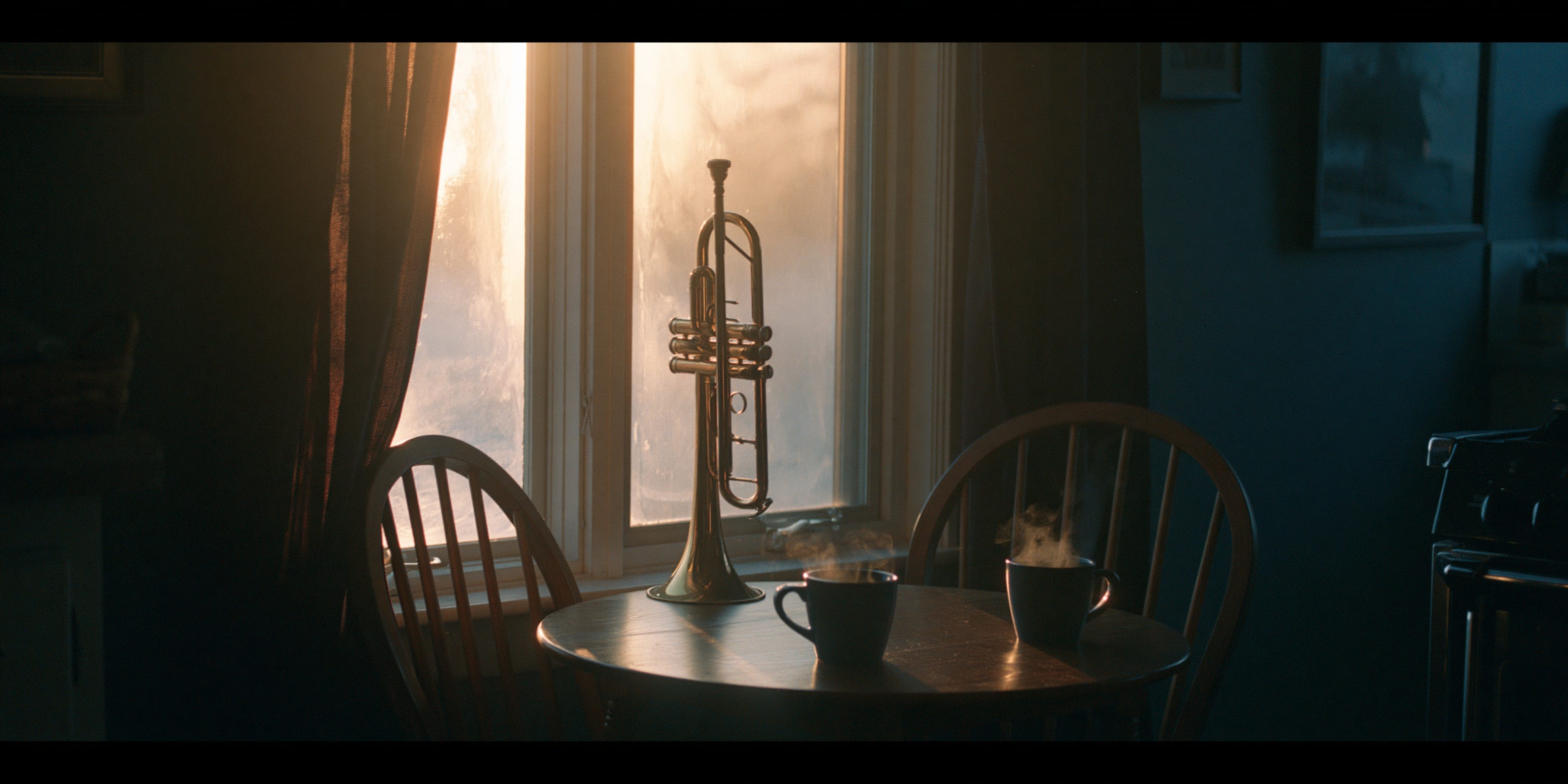
Dear friends—
Here’s the short version: if the love you keep offering someone comes back to you as a wound, the ache that follows asks whether it was ever real, and whether it is now lost. It was real. It is not lost. This essay is why.
Recently I published the anatomy of how that wounding works. It stopped at a question it could not answer from inside its own method. This is the answer — not a technique, but a theology of how love actually reaches a person, why it so often can’t land, and why, even then, it is never lost.
If you’re new here, welcome; you’ve picked a fine place to start, and it stands alone. The rest begins below.
Jazz, Shame, and Being With — Essay #13
The Source, the Channel, and the Clearing — a source-grounded theology of reception and its healing
Part Two of a two-part inquiry begun in “How Captivity to Shame Works” (Part One, Essay #12)
Frame: A Source With Us, Not a Reservoir Upstream
The question this essay answers keeps a particular hour.
It arrives at two in the morning — after the anatomy has done its work, after the mechanism has been understood, after you have finally stopped asking what did I do wrong because Part One showed you there was never a lock on your side of the door.
You lie in the dark, and the understanding you fought so hard for turns on you and asks the only question it cannot answer: if the love I keep offering keeps returning to me as a wound, was it ever real? And is it now lost?
I wrote this essay to give words to people who are living that hour and cannot name it.
They are loving someone held captive to shame. They have watched their best and gentlest offerings come back as wounds — the note rehearsed for days, the meal that once meant peace, the plain sentence spoken without defense — and they have begun, quietly, to wonder whether they are going mad.
Part One gave that ordeal an anatomy. It named the mechanism by which an ordinary act of love becomes, for the captive, an assault, and it insisted throughout on a mercy: the captivity is the enemy, not the captive.
But naming the mechanism raises the harder question — the two-in-the-morning one. And my answer, stated at the front so you can hold it while I earn it, is that the love was real and it is not lost.
Everything that follows is an account of why — and the account turns entirely on a single word that Part One assumed without examining. That word is reception.
One commitment governs the whole, as one governed Part One. There, the commitment was that the machinery described is standard human equipment, not the defect of a class. Here, the commitment is theological, and I need to lay it down before we go any further, because the most natural way to picture love is subtly and consequentially wrong.
✦
The natural picture is processional. It says: God is the source, and love flows from God, through the one who loves, to the one loved. Origin, procession, terminus. A supply chain with a halo. It is ancient and beautiful and it hides a fault line. Wittgenstein said a picture can hold us captive. This one held me for twenty years — which makes it, by this series’ own lights, one more captivity: a false story, inhabited.
I preached it for years. I drew the arrows on newsprint at retreats: from God, through you, to the one you love. I owe some congregations an apology, and this section is its first installment.
For if God is an origin from which love proceeds to a distant terminus, then God is, in the decisive sense, elsewhere — upstream, dispensing a substance that must travel to arrive.
And the whole burden of the Incarnation is that this is not so. The name is Immanuel, God with us, and the preposition is the gospel.1 God’s deepest purpose was never to ship a remedy from a distance to a creature in need. It was, from before the foundation of the world, to be with us.2
The fundamental grammar of God is not procession but presence: not fromand to, but with.
✦
So here is the claim the rest of this essay leans on, stated plainly:
The source of all love is not a reservoir upstream that might run low. It is a presence already with us that cannot be diminished.
This is not a smaller claim than the processional one. It is far larger.
And it is a claim about you, not only about God — because the processional picture was never only a doctrine. It was a job description, and a dubious one. It made you the middle of the line: the courier of a love that originates elsewhere and terminates in the one you love, with successful delivery riding on you. No wonder you are tired. If the picture is wrong about God, it is wrong about your job.
And some of you looked inside and found no exhaustion — just nothing. No warmth to send, no flow, nothing you could honestly call love.
Hear this before you conclude anything about yourself: an empty courier is not an empty man. You have been searching the satchel. The love was never in the satchel.
It means the love you keep offering is not stalled or withheld somewhere up the line, waiting to be conveyed. It has already arrived.
It is with him — with the captive whose face has closed, present in the very room where the cold has fallen, before you reach or fail to reach.
God with us means the love was never in transit. The problem is not on the supply end. It is on the reception end.
And here is the part that took me years to take in: this source cannot be diminished. Not because God has made a promise and God keeps promises — though that is true. Because God is God. Theologians have a compressed way of saying this: God’s being is God’s act. Uncompressed, it means there is no God hiding behind the God who turns toward us — no reserved, undecided God we haven’t met yet, no other face, no fine print. The turning-toward-us is not something God does. It is who God is. And the Yes of that turning has been spoken once for all.3
Deeper still — and this is where it gets mind-boggling in the best way. God is not the biggest fish in the ocean, not even the biggest imaginable fish. God is the ocean.4 Being itself. Goodness with nothing missing. A fullness that nothing outside it can drain, because there is no outside.
Which means God’s love for the captive is not a stance God took and might have declined. It is what God is. It cannot fail at its head, because there is no lack in it that could open into failure.
Hold the two together — the source is with, and the source is inexhaustible— and something becomes sayable that the cold spends all its force denying.
First, the picture the rest of this essay lives in. Between any two people who love runs a channel — not a wire, not a pipe, but the openness by which what one offers can actually get into the other. Love does not only have to be given. It has to be received, and the channel is where the receiving happens or fails. And channels can clog. What clogs this one we will come to call silt: the residue an old fear leaves in a body, layer upon layer, until even an offered warmth cannot get through.
So: when everything between two people has gone cold, when the channel has silted so completely that no warmth passes either way, the thing that matters most has not moved and cannot be touched.
Not one particle of the coldness reaches the source, because the source is not upstream to be reached. It is with the one you cannot reach, in the cold, undammed.
✦
If an objection is rising in you, it rose in me first, and I want to answer it before we go on — because the claim can be heard coldly, and coldness would betray it. To say the source cannot be diminished can sound like a God serenely unbothered, watching our silted channels from a height, untouched because uninvolved.
That is a caricature, and Scripture corrects it, because being with is not detached presence but passionate participation.
The prophets did not know the philosophers’ unmoved mover. They knew a God of pathos — the most moved mover, pierced by his people’s betrayals, grieved by their suffering.5
It looks like a flat contradiction — a God who cannot be diminished, yet suffers with us. It is not, and untying this knot changed how I pray. The tradition’s word here is apatheia, and if you have been with this series a while, you have met it before, wearing Stoic armor — the sage’s fortress: feel nothing, need no one. Applied to God, the word was never supposed to mean that. It means God cannot be drained. Not numb — undrainable. Nothing outside God can make God less, and so God has nothing to defend.
Precisely because God cannot be diminished, God can afford to be wholly with us in our worst — to enter the cold, suffer-with without reserve, be pierced by the captive’s incapacity — and lose nothing.
This is the consolation, and it is not the consolation of a full reservoir kept safely upstream. It is that the undiminishable God is with him in the obstruction, pierced by it, unexhausted — which is why that presence does not flee the way yours wants to.
✦
Let me name one more connection before we go back under the hood, because it is why this essay belongs to Jazz, Shame, and Being With and not only to the kitchen table it ministers to. This series has been tracing a false creed through the profane sacraments of a civilization — the auction block, the ledger, the redlined map, the wall — practices that taught American bodies a single story about worth: You are what you produce. You belong if you are useful. You bear your own worth, and your own shame, alone. Worth achieved, not received. And what can be achieved can be lost; only what is received can be secure.6
What those essays followed across peoples and centuries, this one follows into a single nervous system. Reception is the whole question here, because a foreclosed reception is what that creed finally does to a body. In a world where worth must be achieved, there are no gifts — only exchange — and so the unearned gift becomes unreceivable.
The captive who cannot take love in is not suffering a private malfunction. He is reciting, in his flesh, a creed a civilization taught him.
The vocabulary of Part One carries forward unchanged. The two figures remain the captive — the one held captive to shame — and the near one, whoever is on the stand in the ensemble the present moment has called.
One change from Part One, and it is deliberate. There the captive was sheand the near one he; here I reverse them, because the figures are offices, not persons — the captivity has no sex, and the pattern runs in every direction. And by the time this essay finishes confessing, you will see the other reason: the captive’s chair fits me.
What follows is not Part One repeated. It is the ground Part One stood on.
Movement I — Reception: How the Gift Cannot Land
Reception is not a word of convenience. It is a distinct operation, with its own conditions and its own failure — and Part One’s four triggers were four ways of failing at it.
To bear another’s separate mind, to receive their need, to accept their gift, to take in their limit: each asks the captive to receive, and in each the receiving is what breaks. Reception is the site where the whole ordeal is decided.
Begin with what reception is for. Part One’s keystone already named it: the deepest human need is attunement, and shame is the affect that governs the bond — the flush that registers a break in communion and calls us back toward the music.
Rightly working, shame is the very sense by which we receive one another.7Which is why its captivity is not the failure of one faculty among many. It is the injury of the organ of reception itself.
When shame fuses with the self — so that every signal of failure reports not I stepped wrong but I am wrong — the faculty by which the captive was to have received love is turned against reception.
The offer is refused at the door because the door has been wired to read every arriving gift as an accusation. This is why, in Part One, the tenderer the reach, the surer the refusal: not perversity, but a reception organ so injured that incoming love registers as incoming threat.
✦
Say it as plainly as it can be said, because you may have waited years for this sentence: the captive is not withholding love. He is unable to receive it.
What looks like refusal — the closed face, the gift handed back — is not a decision made against you. Your love arrives and cannot get in, the way music arrives at a blocked ear. It is not won’t. It is can’t.
That is not an excuse offered on his behalf. It is the most exact description available, and it is the difference between reading his coldness as a verdict against you and reading it as a wound in him.
✦
Reception has a body. You can watch it fail at three depths8 — and I want to show you all three, because each is a description of the reception end and nothing else.
A word about how I hold this science before I lean on it: these are models, not verdicts. They converge from different labs onto one picture, which is why I trust them — but they are strongly corroborated accounts of mechanism, not settled facts about the soul. And they are never the ground of the theological claim. The theology stands on its own feet; the science shows me, in unnerving detail, what the theology looks like in a nervous system.
Start at the surface. Fonagy and his colleagues call it epistemic trust: the capacity to receive another person’s communication as meant for you — trustworthy enough to take in, trustworthy enough to be changed by.9 Its opposite is epistemic vigilance: the posture of someone who learned early that what people tell you is likelier to harm than to help, and so holds the channel shut.
This is why reassurance and evidence and love cannot land: not the wrong words, but a closed channel. The mind cannot take in what it cannot trust, and it learned long ago that it could not trust.10
Beneath that is the older, automatic layer — what Porges named neuroception: the nervous system’s continuous, pre-conscious reading of safety and threat, running below thought.11
Neuroception gates reception. In a state of safety, the channel is open; the face softens, the gift can be received as gift. When the system reads danger and shifts into mobilization or shutdown, the receiving apparatus silts — not by decision, but by state.
This is why presence, not persuasion, is what finally works. Neuroception does not parse arguments. It reads the steadiness of another body.
You cannot talk a channel open. You can only be safe near it until it opens.12
Beneath even that is the developmental floor — the channel as it was first built, across thousands of cycles of rupture and repair between an infant and the one who held him.13
Where the learning went well, the channel’s baseline openness is high, and repair after rupture is expected. Where it went badly, the channel silts at the smallest provocation, and the grown creature meets every offered love through the residue of an early lesson that love does not reliably come.
Reception, at bottom, is a body still waiting — either one that learned the waiting ends, or one that learned it does not.1415
All three depths describe one thing. None of them describes how love is sent. Each describes how love is received, and how the receiving fails.
This is what the theology predicts and the science, without being obliged to, corroborates: where it concerns love, the whole apparatus of the body is an apparatus of reception.
✦
Now comes a hard implication, and I would rather meet it than dodge it, because it is where the surviving near one has most often been quietly condemned. The dimensions of being with that the tradition commends — presence, attention, delight — assume in the one being-with-ed a capacity to receive presence as presence.16
That is exactly the capacity captivity to shame has injured. So faithful presence, the very thing being with commends, can in the captive trigger the terror it means to heal, because presence arrives through an apparatus that reads nearness as engulfment.
This is not a refutation of being with. It is the discovery of the conditions under which it must be practiced when reception is injured.
And it yields a sentence the faithful near one needs, because they have been made to feel that any withdrawal is a betrayal: when presence itself silts the channel, the boundary that protects both people is not the abandonment of being with. It is one of its faces.
The Hinge — The Collapse: How Every Blockage Becomes Reception
Part One turned on a Hinge — the relabeling by which the captive’s own unbearable shame is rewritten as the near one’s offense, so the stimulus becomes the crime. This essay turns on a Hinge of its own, and it reorganizes the whole map.
Everything so far has implied that a channel can block at either of two ends: the one who conveys cannot send, or the one who receives cannot take in. But follow the theology one station further.
What is it for the conveyer to fail to send? Only this: she has not received the God who is already with her deeply enough for that presence to reach another through her. Her failure to convey is itself a failure to receive — one station upstream.
There is no conveyer who has the love in hand and merely fails to pass it along, as if love were freight to hoard. There are no warehouses in the kingdom. She has only ever had it as reception. To fail to convey is to have failed to receive.
So the two ends collapse into one kind. All blockage is reception. Every obstruction, the conveyer’s and the recipient’s alike, is a failure of receiving, occurring at different stations along the line.
No one in this economy is ever a clogged pipe that had the goods and jammed. Everyone is a receiver, and the only thing that ever goes wrong is that the receiving closes.
This is more humbling than the two-ended picture, and it is the single most important thing I can say to a defended reader — and I have been him — the loved one who would rather leave the captivity unnamed, because naming it threatens something in himself.
The collapse refuses to let anyone stand as the one who gave rightly and was merely failed by another. It does not divide the world into the sick who cannot receive and the well who can. All of us are at the reception end.
The captive’s silt is more severe; it is not different in kind. What runs in him runs, at lower volume, in everyone who has ever inhabited a false story about themselves — which is everyone.
To name his captivity is not to convict him of a defect the rest of us are spared. It is to name a condition we all share, that has simply, in him, been turned cruelly high.17
✦
And here the tradition steps in and sharpens the collapse, from an unexpected direction. Sin and evil, on the reading this whole series follows, are not substances. They are not things, with a standing of their own. They are false stories, inhabited.18
The silt, then, is not a thing. It has no being of its own. It is a false narrative running in the receiver — I am what is wrong; the gift is a trap; to be reached is to be endangered — and a false narrative, however powerful, is a lack dressed as a presence. The residue in the body is real enough — Part One counted its layers. What has no being of its own is the story the residue keeps telling.
Sin, on this reading, is not first an act but a story: a false account of the self, out of which the hand closes against the very love it was made to receive.
The refusal is real, but it is downstream. The lie comes first; the closed hand is what the lie produces.
Which is why the silt can be cleared without remainder — there is nothing there to defeat, only a lie to be unlearned. Evil is not a rival power to grace. It is the absence grace fills.
Movement II — Channel: What the Near One Does With What He Receives
Part One’s second movement was the Discharge — what the captive does with a pain he cannot hold: expels it, hot or cold, onto the near one. This movement is its complement — what the near one, in turn, does with what she receives. And the answer is a structure and a discipline.
First the structure, because it is what makes the whole thing survivable. Picture the dyad — two who play as one while remaining two. Not fused: fusion is a disease.
Two, genuinely, and yet joined, so that love between them is real mediation and not two soliloquies in one room.
The vocation of each is the same, and it is not to love the other infinitely, which no finite creature can. It is to mediate a love that is not one’s own — to get out of the way so that what the one you love meets through you is not the trickle of your own capacity but the overflowing fountain of the God already with him. Teresa of Ávila drew this picture four and a half centuries ago: two basins, she said — one filled through many conduits, water brought in from far away by much engineering; the other built over the spring itself, filling from within, quietly, until it overflows.19 Every courier is a first-basin lover. The gospel is the second basin.
Paul said it without a picture, in a sentence written for the ashamed: hope does not put us to shame, because the love of God has been poured into our hearts through the Holy Spirit who has been given to us. Poured — not piped.20
Getting out of the way does not mean letting a flow pass through from elsewhere. It means not obstructing the presence already here.
There are two such channels between two people, not one — and everything livable depends on the two.
Two of them, each rising from the same spring, running opposite ways: one by which the God-who-is-with-him becomes tangible to you through him, one by which the God-who-is-with-you becomes tangible to him through you. If there were only one shared channel, his obstruction would be your obstruction, his cold your cold, and you would be pulled into the oldest and most destructive error available to the one who loves a captive: making his interior the gate of your own capacity to love.
That is fusion, and it burns the near one down, because it hands your ability to love over to the nervous system least able to steward it.
Two channels dissolve the trap. If his channel is silted, yours is not.21 Your love can flow while his is dammed.
This is the structural truth beneath a familiar image — someone in a memory unit, lifting the spoon to a parent who no longer knows their name.
The love flows through them, from a source that is not the parent’s recognition, to one whose reception has failed. Their channel is open; the parent’s is shut.
That is not tragedy defeated. It is tragedy inhabited — the only love that can survive when the one you love cannot, for now, love back.
✦
Now the discipline, because “keep your channel open” is dangerous left bare. It can be heard as absorb whatever comes — take in the attack, believe the accusation, let the abuse land and call it love.
That is not reception. It is annihilation, and no theology should counsel it.
The name for what open reception actually is came to me from Sam Wells — my teacher, and the friend whose fingerprints are on every essay in this series. He borrowed it from the theatre, and it was the first thing of his I ever borrowed, years before I knew how much more I would take. When an actor is handed a line she did not choose, Sam observed, she can do three things with it.22
She can block it — refuse the offer, shut it down; the scene dies. She can accept it — take the offer on its own terms, so the story stays as small as the offer made it. Or she can overaccept — receive the offer whole, refuse nothing of what is really there, and fold it into a story large enough to redirect it.
This is exactly what the near one is called to do with the captive’s wounding offer. To block the attack is to answer it in kind — attack-other, on Nathanson’s compass of shame, shame flung back as fast as it arrived23 — or to kill the scene outright, the channel slammed from your side. To acceptit is to believe it — to receive I am unbearable, you are cruel, this is your faultas a true report and be leveled by it; the compass calls that attack-self.
Overaccepting is the third thing: to receive the whole blow, and not be leveled by it.
It does not pretend the blow did not land; it does not minimize the cruelty. It receives all of it and redirects it — a graceful pivot from the false story the blow was scripted in to the truer story God is telling: silt, not verdict; captivity, not the captive; a false narrative, not the truth of you. It is how Jesus received the woman at the well — took her offer whole, evasions and all, and redirected the scene to living water. And if you were with me in Part One, you have met this move before under another name: bearing the shame without discharging it — the fifth option the compass does not map — is overaccepting, seen from the stage.
And this is what keeps the boundary from contradicting love. The compass gave withdrawal to the captive — the going-away that expels what cannot be borne — and the near one’s boundary is neither that nor blocking. To step back — to end the exchange, to put real distance between yourself and the other — can be overaccepting’s own next move: you receive the whole of what happened and redirect the scene to a safer room, because part of the truer story is that a self is required for being with, and abuse erases one of the selves.
The boundary is a form of overaccepting, not its opposite.24
Here the two figures of this series meet. Part One rendered being with in the key of jazz; Sam renders it from the stage.25 They name one act.
The march blocks — it forces unison, refuses every offer that does not already fit, discharges the dissonance it cannot bear. Both jazz and being with overaccept — they receive the offered dissonance, refuse none of it, and fold it into a larger music than the one it interrupted.
To be with is to overaccept in the smallest of all ensembles: two who play as one while remaining two, one offering a dissonance he cannot help, the other receiving it whole and playing it not into resolution but into a music large enough to hold it unresolved.
✦
And you have a reception end of your own — which honesty will not let me omit, because a theology of reception that located all the blockage in the other’s receiving would be an elegant diagram of his pathology and nothing more.
If all blockage is reception, and you are, at every station, a receiver, then there is silt at your end too. Sometimes the love God bears you is genuinely being mediated, even through him, even in the cold — and it is your false story that will not let it land.
Here I stop describing and start confessing.
The catechism I named in Part One — be the gift, bear the weight, never need — is, notice, a theology with no receiving posture in it at all. It formed me into a magnificent conveyer and a closed port.
If you want to know what my own silt is made of, it is exactly that: a lifetime of counting the bearing as proof I was enough, which is just the achieved-identity creed wearing a servant’s apron.
You have a nervous system; it has learned this relationship; your own channel silts. The hypervigilance — the scanning for signs the cold is returning, the reading of an ordinary silence as its onset — is reception-end obstruction in you.
When the other withdraws and you receive it instantly as verdict, you may be receiving accurately. Or you may be meeting an ordinary weary moment through the silt of your own vigilance, unable to receive even neutrality as anything but threat.
You cannot always tell from inside, and the model will not tell you, because its whole point is that the silt can sit at either end.
This is what turns the two channels from a chart of his captivity into an instrument of your own healing. You are responsible for the openness of your own receiving — at both stations: the receiving that fills your basin, and the receiving that lets it overflow toward him.
You cannot clear his channel — that is not yours to clear, and the trying is a kind of coercion.
But you can tend whether your own end is open enough to receive love when it is, in fact, being given — including the love that reaches you through channels other than him: the source already with you, mediated through friends, formation, and the given warmth of a life you have been trained by grief to disbelieve.
✦
Before the last movement, I need to distinguish two levels of resistance, or I will promise you too much. There is acute obstruction — the silting event, the flare, the cold that descends after a trigger and lifts when the charge drains; that is the cycle Part One mapped, silt that comes and goes.
Beneath it is a standing resistance that never reaches zero, and it deserves its own name: impedance — the finite, chronic, ineradicable friction of inhabiting, always, some false story about oneself and the other.
Until the kingdom comes, no channel runs perfectly clear; even the saint receives through a glass darkly.
Impedance is not pathology. It is finitude — the reason no bond is frictionless and no reception total. It does not vanish with healing; it only, at most, decreases.
The distinction guards two errors at once: the despair that reads every obstruction as permanent damage, when most obstruction is episodic silt that lifts; and the fantasy that healing means a frictionless love, when the end of impedance is real, but it waits for the kingdom.
Movement III — Clearing: What Enables the Recovery of Reception
Part One’s third movement was the Return — attunement recovered not by the near one’s effort but by the settling of a body that finds the tune again: a thaw, not a decision, not wages, arriving unbought. This movement is the ground of that return: the clearing of the channel, which the tradition has called sanctification.
It is not an achievement, and this is the whole difference. The language of working on a relationship tempts us to imagine sanctification as self-plumbing — as if one could reach into one’s own channel and scrape it clean by discipline.
But the injured receiving apparatus cannot repair itself with more of the function that is injured. You cannot clear your reception by receiving harder. That way lies exhaustion and a subtler captivity — the old creed back in vestments, this time grading you on your healing.
The channel clears the way it was first opened: from the source who is already with — the spring beneath the basin, not the reservoir upstream. The love that does get through — the presence that arrives despite the silt, through the captive on a good day, the friend who answers the phone, the bread put into your open hands — the one table where worth is received, not achieved — the steady body that does not flee — that received presence is what dissolves the silt.
Reception is healed by being received.
The channel that failed, in infancy, to learn that reaching produces return is retaught, slowly, in adulthood, by every experience of reaching and being met — which is why science and tradition agree that healing happens not to a person but between persons.26
Grace opens us. Our part is not the clearing but the yielding — the willingness to stop defending the closed channel and let the safe presence near us do to our bodies what argument never could.
I am, for the record, terrible at the yielding. It is the hardest instruction in this essay for a man catechized to bear, because yielding is receiving, and receiving is the one posture the endurance creed never taught.
✦
A word to the physicians who have stayed with me since the reflex fired in Part One, because this is where the pathway I promised becomes concrete. What this movement describes — reception healed by being received, in relationship, over time — is not a devotional gloss on the science. It is the science.
The treatments that actually move this condition, the mentalization-based and dialectical ones, are structured as relationships before they are protocols: a supervised re-attunement, a clinician trained to keep a channel open until the patient’s own can learn the posture.
The manualized part is scaffolding around a bond. Your field, in other words, discovered being with and prudently gave it a billing code.
But it is a pathway, not a hospice — the captive who chooses to walk it is choosing something with published outcomes. And the can’t of this essay is hour-scale, not life-scale: the switch owns the moment, not the arc, and the pathway is walked in the returns between.
The choosing cannot be done for him; that is the tragic remainder I do not minimize.
But between incurable and unchosen lies the whole difference between the counsel of despair you were trained into and the referral you can now make.
✦
And here the waiting acquires a horizon no outcome study could supply — one that changes what the waiting costs. If the clearing depended finally on the fragile arithmetic of two injured nervous systems finding each other, the waiting would be a gamble, and despair would be rational.
But the God who is with is not only inexhaustible; if God is the ocean and not the biggest fish, then God does not fail, in the end, to win the reception God is with us to give. Judgment itself, read this way, is not a distant verdict but the perpetual presence of the Judge, met now in the least of these.27
Which means the captive, in his silted incapacity, is not outside grace and not behind enemy lines.
He is where Christ is met.
The one who cannot receive is Christ in the least of these, and the God who is with him in the silt is the God who will not, at the last, be defeated by it.28The Yes has been spoken; it will also, finally, be received.29
This is a contestable hope, held here as hope and not as a lever — but it is the horizon that makes the waiting something other than a gamble.
You are not laboring to produce a clearing that might not come. You are participating, in the dark and against the impedance, in a clearing that is finally sure.
And there is a nearer mercy the tradition keeps in reserve: the Son who took our humanity took our receiving too — as one of us, he received the Father’s love perfectly, on behalf of all whose channels fail. The receiving, too, has been done for him, ahead of him.30
✦
The posture of the clear channel has a name, and it is the name of the whole series. It is being with.
Not working for the one you love, which keeps you the source and him the project. Not even working with, which still measures love by outcome.
But being with — present from fullness, mediating what you did not originate, receiving what you cannot manufacture, delighting in what surfaces without your summons, staying in the room with the one whose channel is silted, not to force his clearing but to be the safe presence near which, in time and not by your effort, his body might read safety and his channel begin to thaw.
Coda — The Source Without Fault: The Structure of Hope
Now the thing this whole inquiry exists to hand you — the words you have been living without.
If you have spent years asking what you did wrong, searching for the conduct that would finally earn his warmth — the right sentence, the sufficient patience, the proof of love that would at last be received — you can set the search down.
Not because you have no ordinary faults, but because the verdict you have been trying to overturn was never reachable by anything you could do.
The triggers were your separateness, your need, your offer, your limit — which is to say, your selfhood and your love. Those are not errors to be corrected.
There was never a key. There was never a lock on your side of the door.
The years you spent looking were not foolish; you were doing the most natural thing a loving person can do, trying to love your way through to someone.
But the love was never the failure. It could not be received, at a silted end, on a downstream channel, by an apparatus injured long before you arrived — and the source it came from never moved, because the source is not upstream to move.
It is with him, undammed.
That is the “so what” of the whole essay, and it is not a technique or a program. It is a release.
To see how reception fails, and where the blockage truly sits, and Who is already with him in the cold, is to be freed from the particular madness of believing the whole thing turns on whether you can finally say the right thing. It does not. It never did.
Part One closed on the tragic structure: the near one is the proximate cause of a wound without being its moral fault, because the very acts by which love is performed are what trip the captive’s alarm. This essay closes on the structure that sits beneath the tragedy and does not cancel it — the structure of hope.
The wounding is unavoidable and the source is undammed. Part One named why the love wounds. Part Two names why, wounding, it is not defeated.
✦
Before I hand you the last thing, three honesty notes — and then I will get out of the way.
The science in these pages is scaffold, not foundation — models, not verdicts, as I said at the start. If Fonagy and Porges and Schore were all revised tomorrow, the source would remain with and inexhaustible, and the channel would still clear only from the spring.
Two of my theological commitments are contestable, and I have marked them as mine rather than the Church’s settled mind: that apatheia means undiminishability, and that the final clearing is certain — the Yes at last received by all. I hold the second as hope — a Goodness without limit will not be finally defeated by a lie with no being of its own — and I have refused to let it become a lever. The certainty of the final clearing is not an argument that anyone must endure the present silt indefinitely. The map shows the country; it does not choose your road. And that refusal is not a withholding but the last gift: a true account of what you are living, handed over without instructions, is what returns your own life to your own hands.
And the model itself — the two channels, the collapse, silt and impedance, overaccepting, sanctification as clearing — is an instrument, not a finding. I built it; Teresa and Sam and the prophets supplied the parts. Hold it as loosely as I do, and correct it where your life knows better.
You are not the source. You never were. You are the basin the spring rises in.31 And that is not the poverty of your love. It is its freedom.
Notes
On Immanuel as the governing form of God’s relation to creation, and presence rather than procession as the fundamental grammar, see the being-with theology at n. 2 and n. 11.↩
Wells, A Nazareth Manifesto: Being with God (Wiley-Blackwell, 2015), where being with — over against working for, working with, and being for — is developed as the eternal purpose of God rather than a remedial response to the fall.↩
Barth, Church Dogmatics II/1 (God’s being-in-act) and IV/1 (reconciliation; the accomplished divine Yes). The reading taken here is actualist: there is no God behind the God who turns toward us. And the Yes is Paul’s before it is Barth’s: 2 Corinthians 1:19–20 — “in him it is always Yes; for all the promises of God find their Yes in him.”↩
Hart, The Experience of God: Being, Consciousness, Bliss (Yale, 2013); The Beauty of the Infinite (Eerdmans, 2003). The claim secured is that the source is undammable by nature and not only by covenant.↩
Heschel, The Prophets (Harper & Row, 1962), on divine pathos. The reconciliation of pathos with classical impassibility, via a construal of apatheia as undiminishability rather than affectlessness, is the author’s, and is flagged as contestable in the Coda.↩
Series continuity. See especially Essay 9 and Essay 11. The shift from received identity (worth given through covenant and communion) to achieved identity (worth produced and demonstrated) is there traced at civilizational scale; here it is met at the scale of one soul’s capacity to receive. Tran’s privatio of gift — the extraction of what can only be received — names the same foreclosure this essay calls the reception failure.↩
See Part One, “The keystone: attunement, and shame as the affect of communion,” drawing on Nathanson’s account of shame as an innate affect governing the interpersonal bond.↩
Series continuity. These three depths are the reception-side of the window of tolerance developed in Essay 3 and Essay 4. Where those essays traced how shame narrows the window, this traces what a narrowed window cannot take in.↩
Fonagy, Luyten, and colleagues (2017a, 2017b) on epistemic trust and its foreclosure as epistemic vigilance; the same sources ground Part One’s non-defect, adaptation-based framing.↩
Series continuity. The foreclosure named here in a single nervous system is, at the scale of a people, the same closure the collective leg of this series traces: a community formed to achieve its worth becomes, like the captive, unable to receive what it cannot control — correction, testimony, the stranger’s word — so that reassurance and evidence fail to land on a movement exactly as they fail to land on the captive. The extreme of this foreclosure — what Fonagy came to call epistemic petrification — describes one mind; the collective leg of this series argues it scales to a movement. The reception failure is one mechanism, met first in one body.↩
Porges, The Polyvagal Theory (Norton, 2011); Dana, The Polyvagal Theory in Therapy(Norton, 2018), on neuroception as the pre-conscious appraisal of safety that gates social engagement.↩
Series continuity. This is the pastoral form of what the collective leg argues politically. Because reception is gated below thought — by one body’s reading of another, not by the force of an argument — presence, not persuasion, opens a channel at either scale. It is why the sermon loses to the rally and the case loses to the crowd: the movement transmits safety and threat where argument cannot reach, and only a steadier presence, not a better argument, answers it. What the near one learns at the bedside, the church must learn in the public square.↩
Schore, Affect Regulation and the Origin of the Self (Erlbaum, 1994) and subsequent work on right-brain regulation and the developmental establishment of affect-regulatory capacity.↩
The image of the body’s enduring readiness for the arrival of what was needed and missing is Badenoch’s, The Heart of Trauma (Norton, 2018).↩
Series continuity. The channel laid down between infant and caregiver is the individual atom of what the collective leg traces between generations: a people’s carried wound handed to its children through the ordinary channels of care, so that what one generation could not mourn the next inherits as its own unhealed readiness. The body still waiting is, at the scale of a people, the wound Volkan calls a chosen trauma — a humiliation transmitted not as memory but as identity, through the same tender machinery that transmits everything else.↩
Wells, Incarnational Ministry and Incarnational Mission (Eerdmans, 2017–2018), on the dimensions of being with. That these dimensions presuppose a reception capacity injured in captivity to shame — and that the boundary is therefore a form of being with rather than its betrayal — is developed from the author’s prior work on being with and boundaries in shame-based relationships.↩
Series continuity. This refusal to divide the sick who cannot receive from the well who can is the person-level ground of a claim the collective leg makes and must guard: that the dominative movement and its mirror image run one psychology, not two. The mechanism is shared — all are at the reception end — but shared mechanism is not shared situation. The collective argument insists on a distinction this essay does not yet need: that two peoples may close by the same silt while standing in wholly different moral circumstances. What is named here grounds the symmetry of mechanism; it does not flatten the asymmetry of situation.↩
On sin and evil as narratival rather than ontological, see the author’s exegesis of Wells on sin and evil; the corollary drawn here is that the silt is privative and therefore clearable without remainder. The true-story/false-story grammar is the series’: the profane sacraments of Essay 11 are practices that rehearse the false story at civilizational scale — writing worth is achieved, the gift is a trap into a people’s body — exactly as the silt rehearses it in one nervous system.↩
Teresa of Ávila, The Interior Castle (1577), Fourth Dwelling Places, ch. 2 — the two fountains, distinguishing the consolations we acquire by effort from the delights God gives at the spring. Teresa loved the Samaritan woman’s plea for living water from childhood (The Way of Perfection, ch. 19); she belongs in any account of a source that is with rather than upstream.↩
Romans 5:5. The apostolic compression of this essay’s whole argument: love arrives by outpouring in place, not by conveyance — and the outpouring is the Spirit, the Giver given. Paul’s sentence welds the essay’s themes in the apostle’s own order: shame answered by hope, hope grounded in love, love arriving by outpouring, the outpouring being the Spirit.↩
Series continuity. Two who play as one while remaining two — joined but not fused — is the smallest instance of the form the collective leg names as the alternative to domination: what an integrative neuroscience calls the differentiated belonging of the MWe, and what the tradition has always called the Body, whose members are one without ceasing to be many. Fusion is the disease at both scales — two people collapsed into one nervous system, the crowd collapsed into one will — and the cure is the same at both: a belonging that does not dissolve the self it gathers. The dyad here is the Body in miniature.↩
Wells, Improvisation: The Drama of Christian Ethics (Brazos, 2004), on blocking, accepting, and overaccepting as the three responses to an offer. The reading of the Samaritan woman (John 4) as redirection is Wells’ (Improvisation, 103–114); it was the seed of my own dissertation’s account of improvisational ethics (Uffman 2015).↩
Nathanson, Shame and Pride: Affect, Sex, and the Birth of the Self (Norton, 1992), on the compass of shame — withdrawal, attack-self, attack-other, avoidance: the four scripts by which unbearable shame is discharged. The compass is anatomized in Part One, Movement II.↩
Series continuity. If the discharge is the march performed in a single nervous system — as this essay’s companion notes observe — then overaccepting is its counter-form, and it, too, scales. The community-level form of receiving the whole blow without being leveled by it — condemning the act while refusing to cast out the person, holding the bond through the very disapproval — is what the criminology of reintegration calls reintegrative shaming, and what the tradition states as hate the sin, love the sinner. The march blocks and the ensemble overaccepts at every magnitude from the dinner table to the polity; the boundary that protects a self and the community that keeps its channel open to the one it corrects are one gesture, enlarged.↩
Series continuity. The ensemble and the march are the series’ governing figures for being with and for domination; see Essay 1. The discharge Part One anatomizes is the march performed at the scale of a single nervous system — the premature resolution of a dissonance the body cannot bear, which is the same move the series diagnoses in doctrine and in politics.↩
Series continuity. This is not only an agreement of science and tradition but the deeper claim the collective leg rests on: that the self was never the solitary thing the modern picture assumed. If the brain is built through relationship — if there was never an isolated self in which a wound could be sealed or healed alone — then reception’s repair between persons is not a therapeutic preference but a consequence of what a person is. (A convergence Paul himself anticipates — the self addressed into being — as Susan Eastman has shown.) The same truth undoes, at the scale of a people, the individualism a theology of achieved identity depends upon: there is no self-made soul to be saved by its own performance, because there was never a self-made soul at all.↩
Hart’s reading of Matthew 25, in which final judgment is not deferred but perpetually present, and Christ is met now in every victim. The application to the captive is the author’s extension.↩
The dogmatic ground of this presence is Holy Saturday — the Son’s descent among the dead (Balthasar, Mysterium Paschale): God’s solidarity extended into the one state where no response is possible at all. Part One heard Dana liken the dorsal collapse to Holy Saturday’s silence; this is why the likeness holds.↩
Hart, That All Shall Be Saved: Heaven, Hell, and Universal Salvation (Yale, 2019). The universalist horizon is held here as hope and marked as contestable in the Coda; it is deliberately not permitted to function as counsel about endurance.↩
Torrance, The Mediation of Christ (Paternoster, 1983), on the vicarious humanity of Christ: the Son’s receiving of the Father’s love, as one of us and on our behalf, so that our response — and the captive’s — is anchored in his, not in ours.↩
John 7:38–39: “Out of his heart shall flow rivers of living water” — and the evangelist’s own gloss: “this he said about the Spirit.” The basin sentence is already in the Bible, and already pneumatological: the Spirit poured in (Romans 5:5), the Spirit rising out (John 7:38–39), Teresa’s second basin between them.↩
Working Bibliography
Badenoch, Bonnie. The Heart of Trauma: Healing the Embodied Brain in the Context of Relationships. New York: Norton, 2018.
Balthasar, Hans Urs von. Mysterium Paschale: The Mystery of Easter. Translated by Aidan Nichols. Edinburgh: T&T Clark, 1990.
Barth, Karl. Church Dogmatics. II/1, IV/1. Edinburgh: T&T Clark.
Dana, Deb. The Polyvagal Theory in Therapy: Engaging the Rhythm of Regulation. New York: Norton, 2018.
Eastman, Susan Grove. Paul and the Person: Reframing Paul’s Anthropology. Grand Rapids: Eerdmans, 2017.
Fonagy, Peter, Patrick Luyten, et al. Papers on epistemic trust, mentalizing, and personality functioning (2017a, 2017b).
Hart, David Bentley. The Beauty of the Infinite: The Aesthetics of Christian Truth. Grand Rapids: Eerdmans, 2003.
———. The Experience of God: Being, Consciousness, Bliss. New Haven: Yale University Press, 2013.
———. That All Shall Be Saved: Heaven, Hell, and Universal Salvation. New Haven: Yale University Press, 2019.
Heschel, Abraham Joshua. The Prophets. New York: Harper & Row, 1962.
The Holy Bible, New Revised Standard Version. Nashville: Thomas Nelson, 1989.
Nathanson, Donald L. Shame and Pride: Affect, Sex, and the Birth of the Self. New York: Norton, 1992.
Porges, Stephen W. The Polyvagal Theory. New York: Norton, 2011.
Schore, Allan N. Affect Regulation and the Origin of the Self. Hillsdale: Erlbaum, 1994.
Teresa of Ávila. The Interior Castle (1577); The Way of Perfection (1566). [Translation/edition pending verification against the author’s library.]
Torrance, Thomas F. The Mediation of Christ. Exeter: Paternoster, 1983.
Uffman, Craig David. How the Mind of Christ Is Formed in Community: The Ecclesial Ethics of Richard Hooker. Doctoral thesis, Durham University, 2015.
Wells, Samuel. Improvisation: The Drama of Christian Ethics. Grand Rapids: Brazos, 2004.
———. A Nazareth Manifesto: Being with God. Oxford: Wiley-Blackwell, 2015.
———. Incarnational Ministry: Being with the Church. Grand Rapids: Eerdmans, 2017.
———. Incarnational Mission: Being with the World. Grand Rapids: Eerdmans, 2018.